Label case studies
Before Cupramine: document previous copper treatment in the system
An equipment-history record makes an old copper treatment visible when a current reading is unexpected.
By FishyMag · Published
Manufacturer-source commentary · Not a clinical review or treatment recommendation.
Quick answer
Cupramine’s manufacturer instructions specifically flag previous ionic copper treatment. A current bottle record should therefore include the system’s known copper history, not only the products used this week.
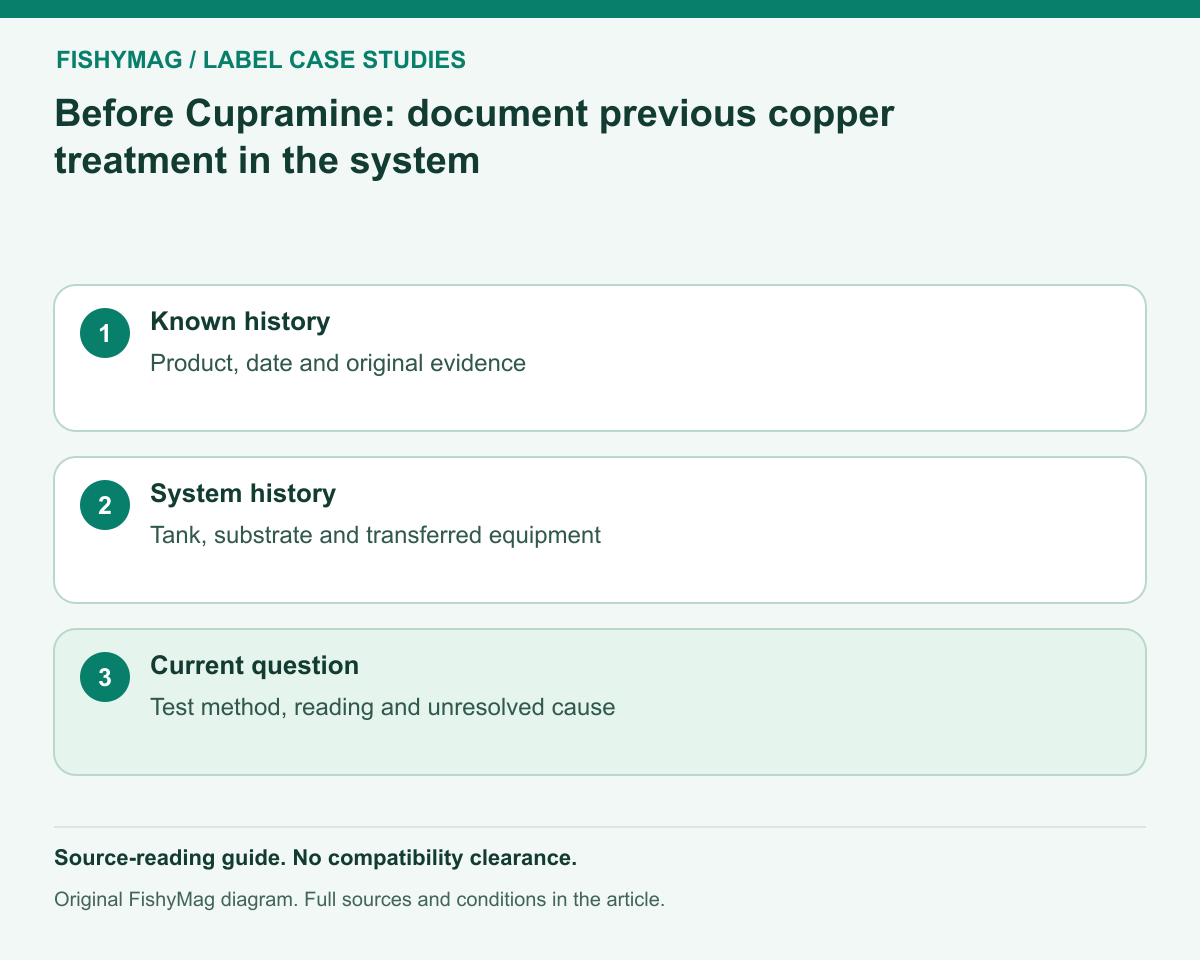
Why an old event belongs in a current record
Seachem’s Cupramine FAQ discusses higher-than-expected readings after earlier ionic copper use and describes release from the filter bed. The directions also call for testing after the initial addition when the tank has that history. This is the manufacturer’s explanation for a defined situation. It is not proof that every unusual reading in a used aquarium has that cause.
Build a history for the equipment, too
Record the tank identifier and any known previous product, approximate period of use and source of that information. Keep substrate, filter-bed and live-rock history with the system description. If equipment was moved from another aquarium, note its origin where known. “Bought second-hand; prior treatment unknown” is more useful than leaving the field blank or assuming it was never exposed.
Separate a confirmed event from a story
For example, a dated keeper log naming a copper product is different from a seller recalling “some medicine years ago”. Put those in confirmed-history and uncertain-history fields. Do not rename an unidentified product as ionic copper. Save photographs or records that identify it and ask for clarification. This procedure records provenance; it does not test surfaces for residues.
Use the history when asking about a discrepancy
Include the applicable bottle, water type, current additions, test method and actual readings alongside the history. Ask the manufacturer which parts of its previous-copper guidance apply. Do not infer a new dose, replace equipment or alter a treatment from this article. The linked formulation record keeps its existing evidence date and restrictions.
Put it into practice
Your checklist
- Record the previous product and how its identity is known.
- Include transferred substrate and filter equipment in the history.
- Send uncertain history and actual measurements with the support question.
Sources and scope
This article distinguishes manufacturer statements from FishyMag’s own workflows and arithmetic examples. Linked formulation records retain their own evidence dates; publishing this article does not refresh those records.
- Seachem Cupramine: manufacturer directions and FAQ, accessed November 7, 2026 ↗
- FishyMag evidence methodology and editorial scope ↗
AI-assisted writing and development. Not hands-on product testing or veterinary review. How we publish →
Read the formulation evidence
These links provide context, not product recommendations.
FishyMag reports what manufacturers say, quoted and linked. It does not diagnose illness or recommend a treatment, and it never infers that a product is safe from the absence of a warning — where no statement exists, it says so.
Formulations change. Always read the label on the bottle in your hand, and contact the manufacturer if your tank contains anything valuable or unusual.