Measurement
Rebuild aquarium hardness from calcium and magnesium
Calculate calcium-magnesium hardness from two analytical results and prevent a second conversion when calcium is already reported as CaCO3.
By FishyMag · Published
Worked arithmetic example · Not a clinical review or treatment recommendation.
Quick answer
For calcium reported as elemental Ca and magnesium as elemental Mg, the cited USGS factors give 24.0 × 2.497 + 6.00 × 4.118 = 84.636 mg/L as CaCO3, about 84.6. A separately reported value of 85 is numerically close, but rounding alone does not establish analytical agreement or independence.
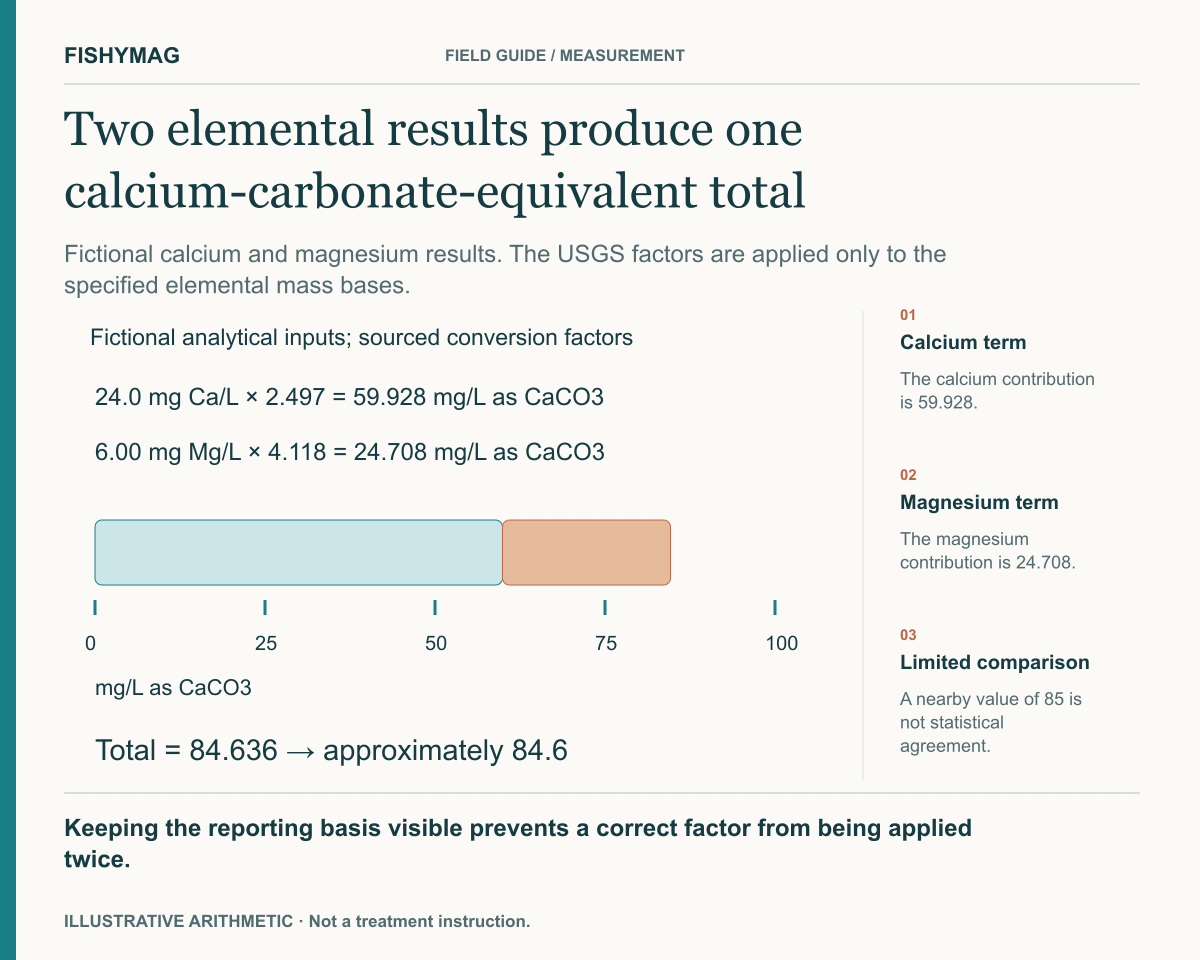
Figure data and explanation
Fictional calcium and magnesium results. The USGS factors are applied only to the specified elemental mass bases.
- Calcium term
- The calcium contribution is 59.928.
- Magnesium term
- The magnesium contribution is 24.708.
- Limited comparison
- A nearby value of 85 is not statistical agreement.
Keeping the reporting basis visible prevents a correct factor from being applied twice.
Read the reporting basis before multiplying
The USGS conversion-factor page gives hardness in mg/L as CaCO3 from elemental calcium and magnesium concentrations. The distinction matters: mg Ca/L and mg/L as CaCO3 are not the same input label. These arithmetic inputs are fictional laboratory results, with compatible sample and reporting bases stipulated for the calculation.
Work each contribution before adding
Keep guard digits during the calculation and round the final result at the justified reporting precision. The factors and arithmetic do not provide an uncertainty budget by themselves.
| Term | Calculation | Contribution, mg/L as CaCO3 |
|---|---|---|
| Calcium | 24.0 × 2.497 | 59.928 |
| Magnesium | 6.00 × 4.118 | 24.708 |
| Combined calcium-magnesium hardness | 59.928 + 24.708 | 84.636, approximately 84.6 |
| Calcium already given as CaCO3 | Retain that contribution on the existing basis | Do not multiply it by 2.497 again |
Treat a nearby reported total as a comparison question
The packet also lists hardness of 85 mg/L as CaCO3 without enough method or uncertainty information to establish agreement. Its difference from the unrounded calculation is 0.364 mg/L as CaCO3. It could even be a rounded calculation from the same calcium and magnesium results, rather than an independent determination. Recover that provenance before calling it confirmation. Do not use numerical closeness to infer the absence of other relevant constituents, a particular calcium source or treatment suitability. The finished output is a reproducible calcium-magnesium calculation and a precisely bounded comparison.
Use your own details
Rebuild aquarium hardness from calcium and magnesium worksheet
Download the editable text file, fill it in on your device and keep it with the relevant record. This blank worksheet records your information; it does not verify entries or approve treatment.
- Calcium result, units and elemental or CaCO3 basis
- Magnesium result, units and reporting basis
- Collection, fraction and laboratory method identities
- Applicable conversion factors and source
- Separate calcium and magnesium contributions
- Unrounded sum and stated rounding
- Other hardness result, method and dependence on the same inputs
- Uncertainty and criteria needed for any agreement claim
Put it into practice
Your checklist
- Confirm elemental versus CaCO3 reporting bases first.
- Calculate the two contributions separately before rounding.
- Recover method, uncertainty and independence before claiming agreement.
Sources and scope
This article distinguishes manufacturer statements from FishyMag’s own workflows and arithmetic examples. Linked formulation records retain their own evidence dates; publishing this article does not refresh those records.
- USGS SIR 2006-5245 conversion factors: hardness from elemental calcium and magnesium; reviewed November 9, 2026 ↗
- USGS: hardness of water; reviewed November 8, 2026 ↗
- NIST TN1297 Appendix D1: measurement terminology; reviewed November 8, 2026 ↗
AI-assisted writing and development. Not hands-on product testing or veterinary review. How we publish →
FishyMag reports what manufacturers say, quoted and linked. It does not diagnose illness or recommend a treatment, and it never infers that a product is safe from the absence of a warning — where no statement exists, it says so.
Formulations change. Always read the label on the bottle in your hand, and contact the manufacturer if your tank contains anything valuable or unusual.