Measurement
Coloured aquarium water: check what the photometer zero used
Audit HI713’s unreacted-sample reference rather than subtracting visible aquarium colour or replacing the sample blank with clear water.
By FishyMag · Published
Manufacturer-source commentary · Not a clinical review or treatment recommendation.
Quick answer
The HI713 manual uses the unreacted sample for its reference stage. An archived run zeroed with different water does not document that operation. Keep the zero-sample identity with the result; do not invent a second colour subtraction or assume that visibly clear water is the correct reference.
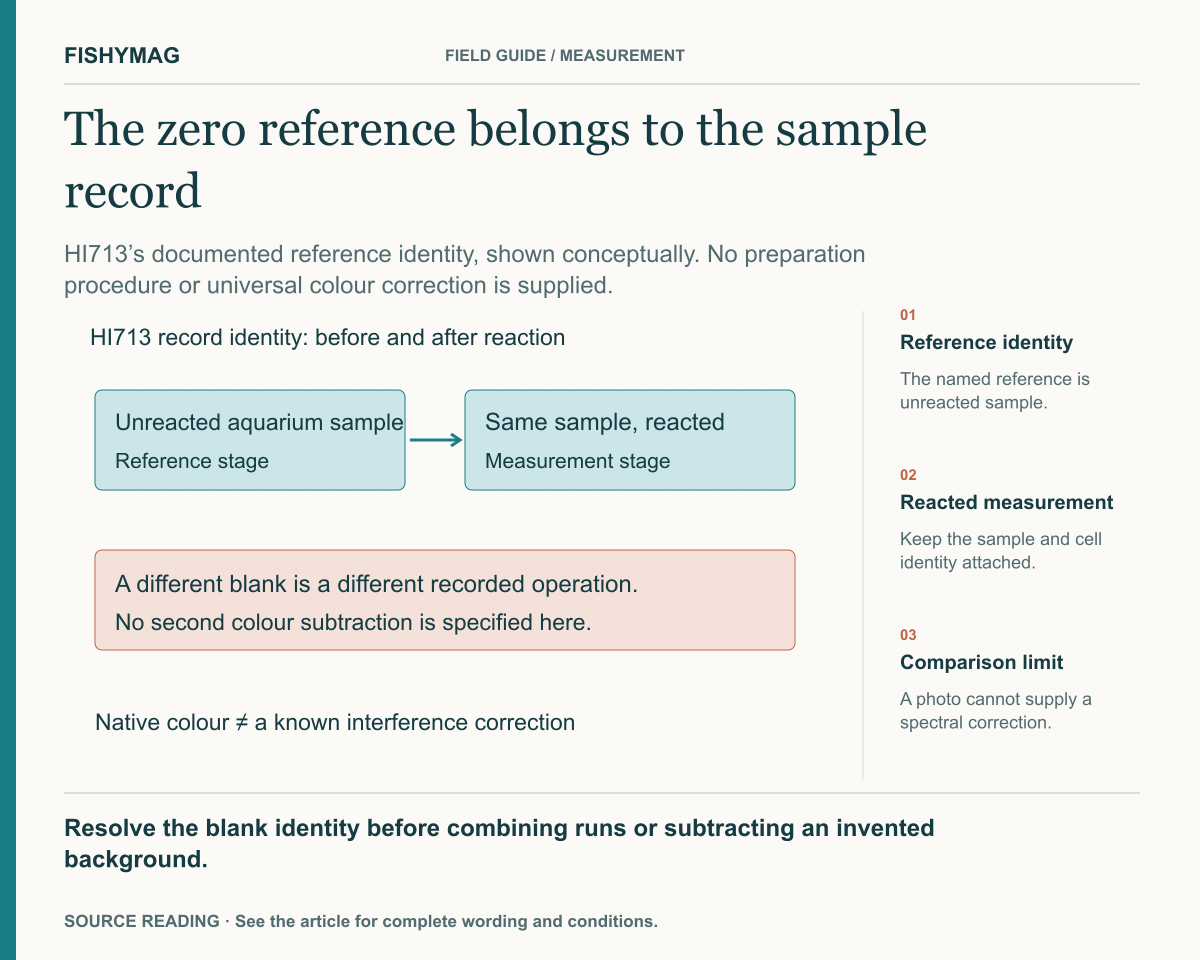
Figure data and explanation
HI713’s documented reference identity, shown conceptually. No preparation procedure or universal colour correction is supplied.
- Reference identity
- The named reference is unreacted sample.
- Reacted measurement
- Keep the sample and cell identity attached.
- Comparison limit
- A photo cannot supply a spectral correction.
Resolve the blank identity before combining runs or subtracting an invented background.
Start with the actual reference operation
Hanna’s linked HI713 instructions use unreacted sample before the reacted measurement. That is a method-specific operation. It is not permission to subtract a visual colour score, subtract a concentration twice or assume that every coloured aquarium matrix is validated. Native sample colour and reaction chemistry remain different questions.
Audit three fictional run records
The invented packet belongs to amber-water aquarium A12. Its records preserve which liquid was used at the reference stage. This is an analysis of archived notes, not a test FishyMag performed.
| Run | Reference record | Completed finding |
|---|---|---|
| R1 | Unreacted A12 sample identified; same cell retained | The named reference operation is documented; other suitability questions remain |
| R2 | Clear water from a separate container used | Does not document the specified unreacted-sample reference |
| R3 | Only “zero done” written | Reference identity unresolved; recover original evidence |
Do not create a correction from a photograph
A photograph can preserve that the sample appeared amber under a particular light. It cannot supply its absorbance at the instrument’s wavelength or establish what happened to that background during reaction. The manual does not provide the keeper with an absorbance-subtraction calculation for this review. The completed outcome is therefore a record finding: R1 documents the specified reference identity; R2 documents a different operation; R3 lacks the identity. None of those conclusions establishes absence of matrix interference. Attach the actual method document and ask the manufacturer about any unresolved sample-colour restrictions before treating unlike runs as a continuous series.
Use your own details
Coloured aquarium water: check what the photometer zero used worksheet
Download the editable text file, fill it in on your device and keep it with the relevant record. This blank worksheet records your information; it does not verify entries or approve treatment.
- Aquarium and sample identity
- Instrument or laboratory method revision
- Original reading including flags
- Chemical basis and unit
- Sample preparation or blank identity recorded
- Quality-control evidence
- Supported finding and calculation
- Unresolved question and source
Put it into practice
Your checklist
- Record which liquid was used for the reference stage.
- Follow the named method rather than substituting clear-looking water.
- Keep sample colour and chemical interference as separate questions.
Sources and scope
This article distinguishes manufacturer statements from FishyMag’s own workflows and arithmetic examples. Linked formulation records retain their own evidence dates; publishing this article does not refresh those records.
- Hanna HI713 manual IST71309/20; reviewed November 8, 2026 ↗
- FishyMag evidence methodology; reviewed November 8, 2026 ↗
AI-assisted writing and development. Not hands-on product testing or veterinary review. How we publish →
FishyMag reports what manufacturers say, quoted and linked. It does not diagnose illness or recommend a treatment, and it never infers that a product is safe from the absence of a warning — where no statement exists, it says so.
Formulations change. Always read the label on the bottle in your hand, and contact the manufacturer if your tank contains anything valuable or unusual.