Measurement
A cuvette that fits is not automatically an optical replacement
Separate physical fit from optical applicability when comparing an aquarium checker’s specified cell with an unverified replacement candidate.
By FishyMag · Published
Manufacturer-source commentary · Not a clinical review or treatment recommendation.
Quick answer
Physical fit answers only a mechanical question. For HI713, the manufacturer lists HI731321 glass cuvettes and caps as an accessory. A different candidate still needs documented optical and instrument applicability. Similar appearance or a seller’s fit claim cannot establish equivalent measurements.
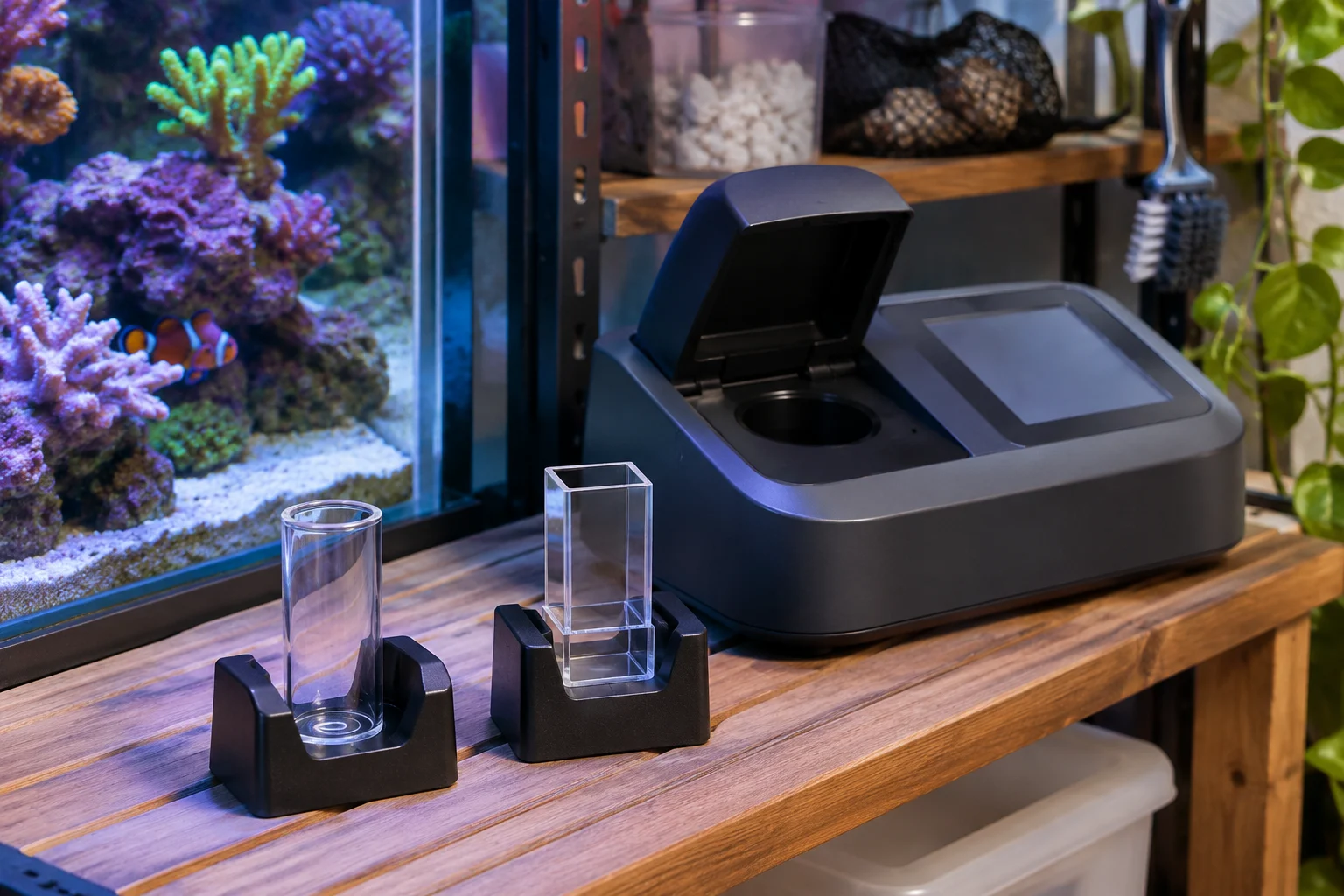
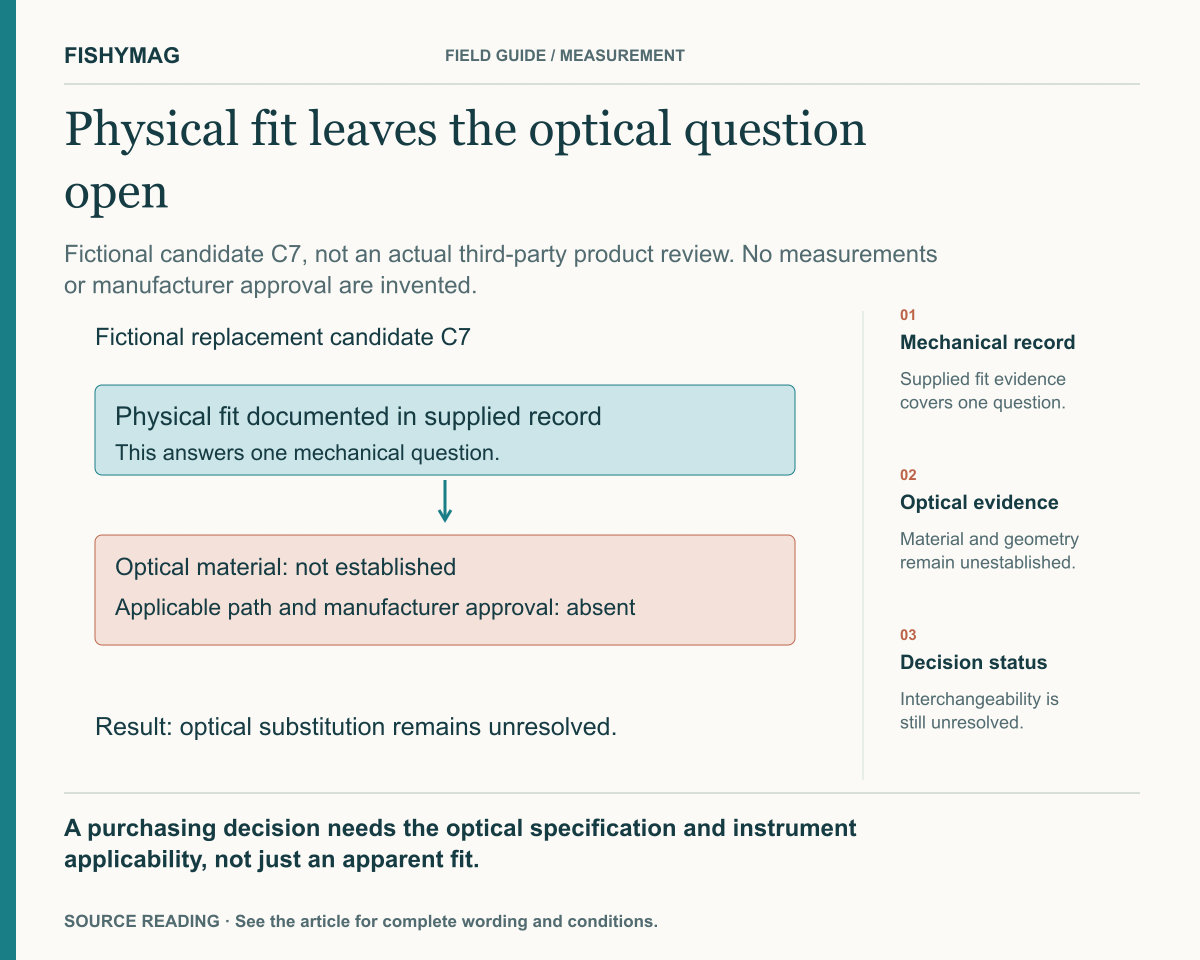
Figure data and explanation
Fictional candidate C7, not an actual third-party product review. No measurements or manufacturer approval are invented.
- Mechanical record
- Supplied fit evidence covers one question.
- Optical evidence
- Material and geometry remain unestablished.
- Decision status
- Interchangeability is still unresolved.
A purchasing decision needs the optical specification and instrument applicability, not just an apparent fit.
Use the actual manufacturer part reference
The linked HI713 manual lists HI731321 glass cuvettes and seal caps. It also calls for the same cuvette between reference and measurement when reviewing an inverted-cuvette warning. Keep the actual instrument document with a replacement decision. A third-party cell’s material, geometry and surface quality cannot be established from a product photograph alone.
Separate a fictional fit record from missing optical evidence
Candidate C7 is invented. Its supplied mechanical inspection record states it fits the holder without force. That declaration is an input to this teaching case, not a measurement FishyMag performed or a claim about any seller’s product.
| Question | C7 packet evidence | Completed finding |
|---|---|---|
| Mechanical fit | Supplied fit inspection | Documented for the fictional case |
| Optical material and transmission | No applicable specification | Unresolved |
| Path geometry and orientation | No instrument-specific evidence | Unresolved |
| HI713 applicability | Seller calls it universal | Manufacturer applicability not established |
| Replacement decision | Fit alone is present | Optical interchangeability not established |
Request evidence that can answer the optical question
Ask for the exact part specification and an instrument-specific applicability statement, including any matching or orientation requirements. An optical path is part of a measurement system, not just the outside diameter of a tube. Do not apply a universal “same dimensions means same calibration” rule or use a different instrument’s cell-matching procedure to authorize C7. The completed review identifies precisely what is missing without declaring an untested candidate defective. If manufacturer documentation does identify the replacement for the exact instrument, retain that evidence and follow its applicable instructions.
Use your own details
A cuvette that fits is not automatically an optical replacement worksheet
Download the editable text file, fill it in on your device and keep it with the relevant record. This blank worksheet records your information; it does not verify entries or approve treatment.
- Method, instrument and document revision
- Aquarium and sample identity
- Original observation or display state
- Container, reagent or accessory identity
- Supported comparison evidence
- Conversion or decision actually authorized
- Unresolved finding and reason
- Original records retained
Put it into practice
Your checklist
- Keep the manufacturer’s exact accessory reference.
- Distinguish mechanical fit from optical equivalence.
- Resolve instrument-specific applicability before assuming substitution.
Sources and scope
This article distinguishes manufacturer statements from FishyMag’s own workflows and arithmetic examples. Linked formulation records retain their own evidence dates; publishing this article does not refresh those records.
- Hanna HI713 manual IST71309/20; reviewed November 8, 2026 ↗
- IUPAC Gold Book: Beer-Lambert law; reviewed November 8, 2026 ↗
AI-assisted writing and development. Not hands-on product testing or veterinary review. How we publish →
FishyMag reports what manufacturers say, quoted and linked. It does not diagnose illness or recommend a treatment, and it never infers that a product is safe from the absence of a warning — where no statement exists, it says so.
Formulations change. Always read the label on the bottle in your hand, and contact the manufacturer if your tank contains anything valuable or unusual.