Measurement
What digestion changes in a phosphorus result
Interpret a fictional difference between direct orthophosphate and digested total phosphorus without assigning it to an invented compound.
By FishyMag · Published
Worked arithmetic example · Not a clinical review or treatment recommendation.
Quick answer
The specified digestion changes the analytical coverage of a phosphorus result. In the fictional matched pair, 0.110 − 0.040 = 0.070 mg/L as P. That difference is not a molecular identification and cannot automatically be called organic phosphorus.
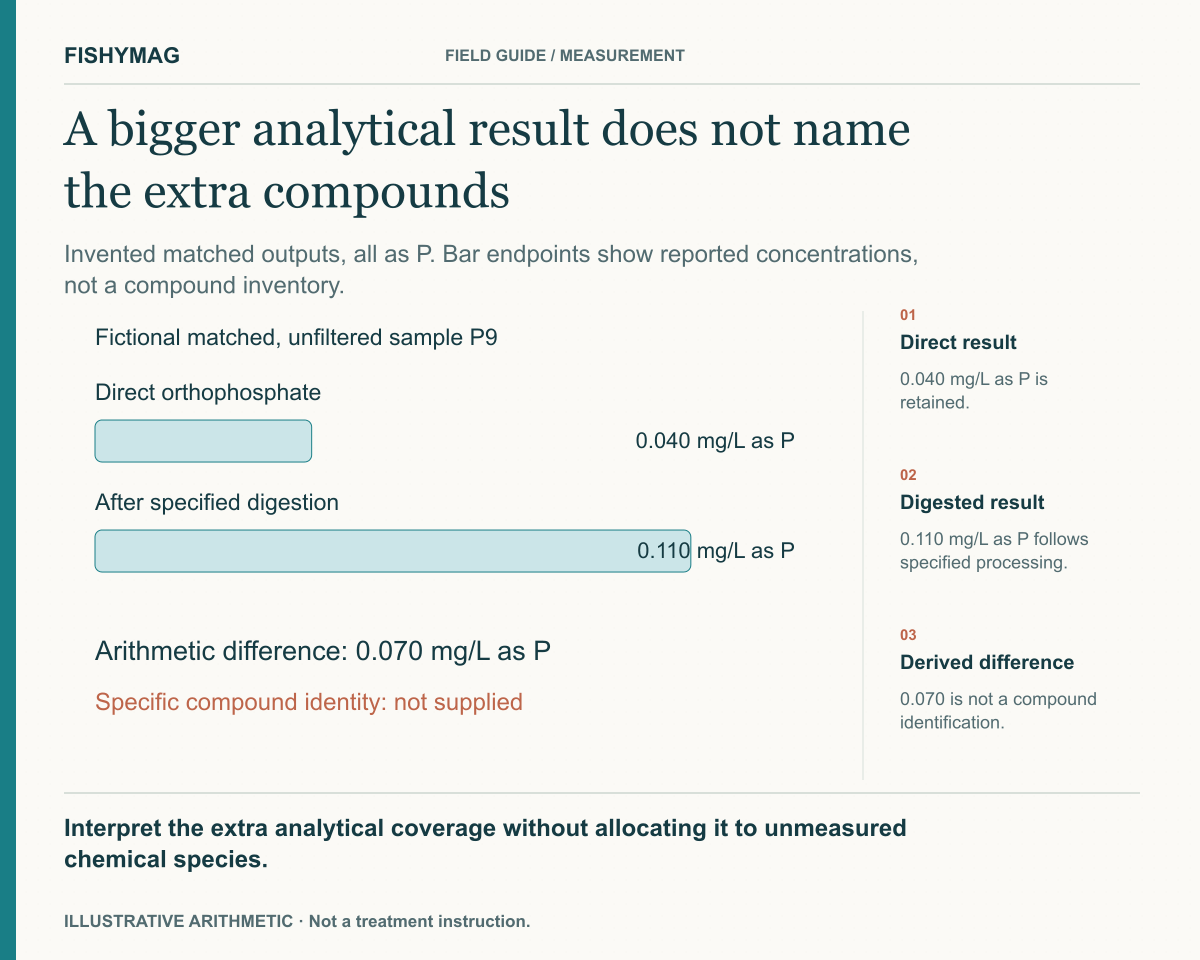
Figure data and explanation
Invented matched outputs, all as P. Bar endpoints show reported concentrations, not a compound inventory.
- Direct result
- 0.040 mg/L as P is retained.
- Digested result
- 0.110 mg/L as P follows specified processing.
- Derived difference
- 0.070 is not a compound identification.
Interpret the extra analytical coverage without allocating it to unmeasured chemical species.
Keep the operation in the result name
EPA 365.1 uses specified pretreatment to define different phosphorus forms. A digested result therefore needs its method and original sample fraction attached. The term “digested” alone does not establish recovery of every conceivable compound, and it does not describe a household test to perform. Ask the analytical laboratory which result definition and validation apply to the report.
Work the difference with the case assumptions visible
The invented packet states that both values concern matched unfiltered sample P9, share the same P reporting basis and are suitable for this descriptive comparison. The table preserves those assumptions. Without them, a numerical subtraction could combine unrelated results.
| Quantity | Case value, mg/L as P | Recorded operation |
|---|---|---|
| Orthophosphate | 0.040 | Direct method analysis |
| Total phosphorus | 0.110 | Specified laboratory digestion and analysis |
| Difference | 0.070 | 0.110 − 0.040; derived |
| Identity of difference | Not determined | No compound-specific analysis supplied |
Avoid naming what was not measured
The difference groups everything captured by the higher-coverage result but not represented in the direct result, subject to the method and measurement limitations. It does not allocate that amount between particular organic compounds or other phosphorus forms. If a report actually seeks a method-defined organic fraction, retain the other operations and component results needed for that definition. Two numbers are not a substitute for the full chain. The completed interpretation in P9 is a 0.070 mg/L as P difference between the specified outputs, with compound identity unresolved. Keep uncertainty and report qualifiers alongside the difference; this constructed calculation alone does not establish a statistically resolved real-world change.
Use your own details
What digestion changes in a phosphorus result worksheet
Download the editable text file, fill it in on your device and keep it with the relevant record. This blank worksheet records your information; it does not verify entries or approve treatment.
- Aquarium and matched sample identity
- Analyte and chemical reporting basis
- Filtered or unfiltered fraction
- Method and pretreatment recorded by laboratory
- Original values and qualifiers
- Permitted derivation and units
- Uncertainty or applicability limits
- Completed interpretation and unresolved questions
Put it into practice
Your checklist
- Identify the exact digestion and original sample fraction.
- Label the difference as derived on the common P basis.
- Leave individual compounds unidentified unless separately measured.
Sources and scope
This article distinguishes manufacturer statements from FishyMag’s own workflows and arithmetic examples. Linked formulation records retain their own evidence dates; publishing this article does not refresh those records.
AI-assisted writing and development. Not hands-on product testing or veterinary review. How we publish →
FishyMag reports what manufacturers say, quoted and linked. It does not diagnose illness or recommend a treatment, and it never infers that a product is safe from the absence of a warning — where no statement exists, it says so.
Formulations change. Always read the label on the bottle in your hand, and contact the manufacturer if your tank contains anything valuable or unusual.