Measurement
Aquarium oxygen: mg/L is not percent saturation
Reproduce a USGS oxygen-saturation calculation with saved inputs and distinguish the percentage from an aquarium concentration or independent second test.
By FishyMag · Published
Worked arithmetic example · Not a clinical review or treatment recommendation.
Quick answer
Percent saturation divides dissolved-oxygen concentration by the applicable saturation concentration and multiplies by 100. A verified DOTABLES run at 25 °C, 760 mmHg and salinity 0‰ gives 8.26 mg/L solubility. With a hypothetical 6.00 mg/L observation, its returned saturation is 72.64%. Those two outputs do not represent two independent tests.
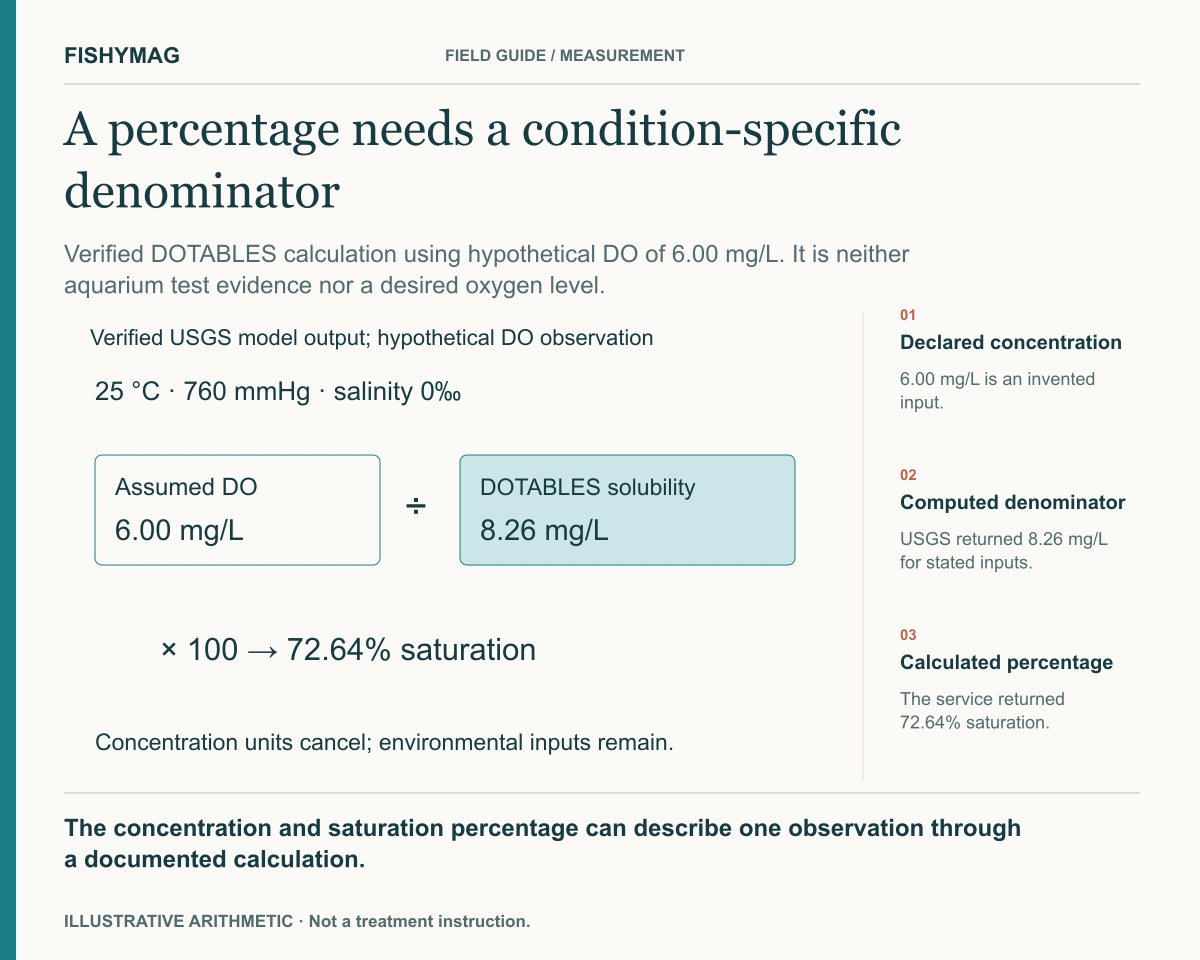
Figure data and explanation
Verified DOTABLES calculation using hypothetical DO of 6.00 mg/L. It is neither aquarium test evidence nor a desired oxygen level.
- Declared concentration
- 6.00 mg/L is an invented input.
- Computed denominator
- USGS returned 8.26 mg/L for stated inputs.
- Calculated percentage
- The service returned 72.64% saturation.
The concentration and saturation percentage can describe one observation through a documented calculation.
The denominator has conditions attached
USGS DOTABLES calculates oxygen solubility from temperature, pressure and salinity. FishyMag requested the stated calculation from its public single-value service and retained the inputs and response on November 8, 2026. The 6.00 mg/L entry was a hypothetical input, not an aquarium measurement. The returned 8.26 mg/L is a model result at those conditions, not a livestock target or a measured oxygen value.
Reproduce the dimensionless percentage
The displayed denominator rounded to two decimals gives 6.00 ÷ 8.26 × 100 = 72.6392%, or 72.64% at the returned precision. A separate pure-arithmetic example, 6 ÷ an assumed 8 × 100 = 75%, has no temperature, pressure or salinity assigned to its denominator.
| Field | Completed model example | Evidence role |
|---|---|---|
| Temperature | 25 °C | Entered model condition |
| Pressure | 760 mmHg | Entered pressure, not an inferred weather value |
| Salinity | 0‰ | Entered model condition |
| Dissolved oxygen | 6.00 mg/L | Hypothetical observation supplied to calculator |
| Solubility returned | 8.26 mg/L | Verified DOTABLES displayed model result |
| Percent saturation returned | 72.64% | Calculated percentage, not another measurement |
Do not assume a percentage display uses the same convention
The YSI ProODO manual distinguishes its Local DO percentage convention from its other percentage mode and says the Local DO selection does not change mg/L readings. Recover the actual mode before trying to reproduce a meter display with DOTABLES. If pressure or salinity basis is absent, the denominator cannot be reconstructed from concentration alone. Retain the original raw display and settings; do not replace them with a model output bearing different conventions. The downloaded example preserves the hypothetical observation separately from the verified service calculation, making that distinction available to the next reviewer.
Use your own details
Aquarium oxygen: mg/L is not percent saturation worksheet
Download the editable text file, fill it in on your device and keep it with the relevant record. This blank worksheet records your information; it does not verify entries or approve treatment.
- Aquarium and oxygen measurement identity
- Instrument, probe and software revision
- Original concentration and percentage displays
- Temperature and salinity with their quantity bases
- Pressure value and local or sea-level convention
- Solubility source, inputs and output precision
- Completed calculation with units
- Unresolved instrument-specific reconstruction
Worked example files
These files contain the article’s worked example. Read its source and scope notes, and keep your own current records before opening an example in a tool.
Put it into practice
Your checklist
- Keep the denominator’s temperature, pressure and salinity.
- Distinguish a calculated percentage from an independent test.
- Recover the meter’s percentage convention before reconstruction.
Sources and scope
This article distinguishes manufacturer statements from FishyMag’s own workflows and arithmetic examples. Linked formulation records retain their own evidence dates; publishing this article does not refresh those records.
- USGS DOTABLES v3.6; independently requested model outputs, November 8, 2026; reviewed November 8, 2026 ↗
- YSI ProODO manufacturer user manual, Rev. C, pages 15 to 25 and Appendices A and B; reviewed November 8, 2026 ↗
AI-assisted writing and development. Not hands-on product testing or veterinary review. How we publish →
FishyMag reports what manufacturers say, quoted and linked. It does not diagnose illness or recommend a treatment, and it never infers that a product is safe from the absence of a warning — where no statement exists, it says so.
Formulations change. Always read the label on the bottle in your hand, and contact the manufacturer if your tank contains anything valuable or unusual.