Evidence decisions
A metal detection does not identify its aquarium source
Calculate an aquarium/source-water copper difference while testing whether the packet can allocate that difference to a fitting, incoming water or historical inputs.
By FishyMag · Published
FishyMag editorial workflow · Not a clinical review or treatment recommendation.
Quick answer
The fictional 8 minus 3 µg Cu/L difference is 5 µg/L. It is not an allocated contribution from a fitting. Collection comparability, water history, inventories and other inputs remain incomplete, so the detection does not identify its source.
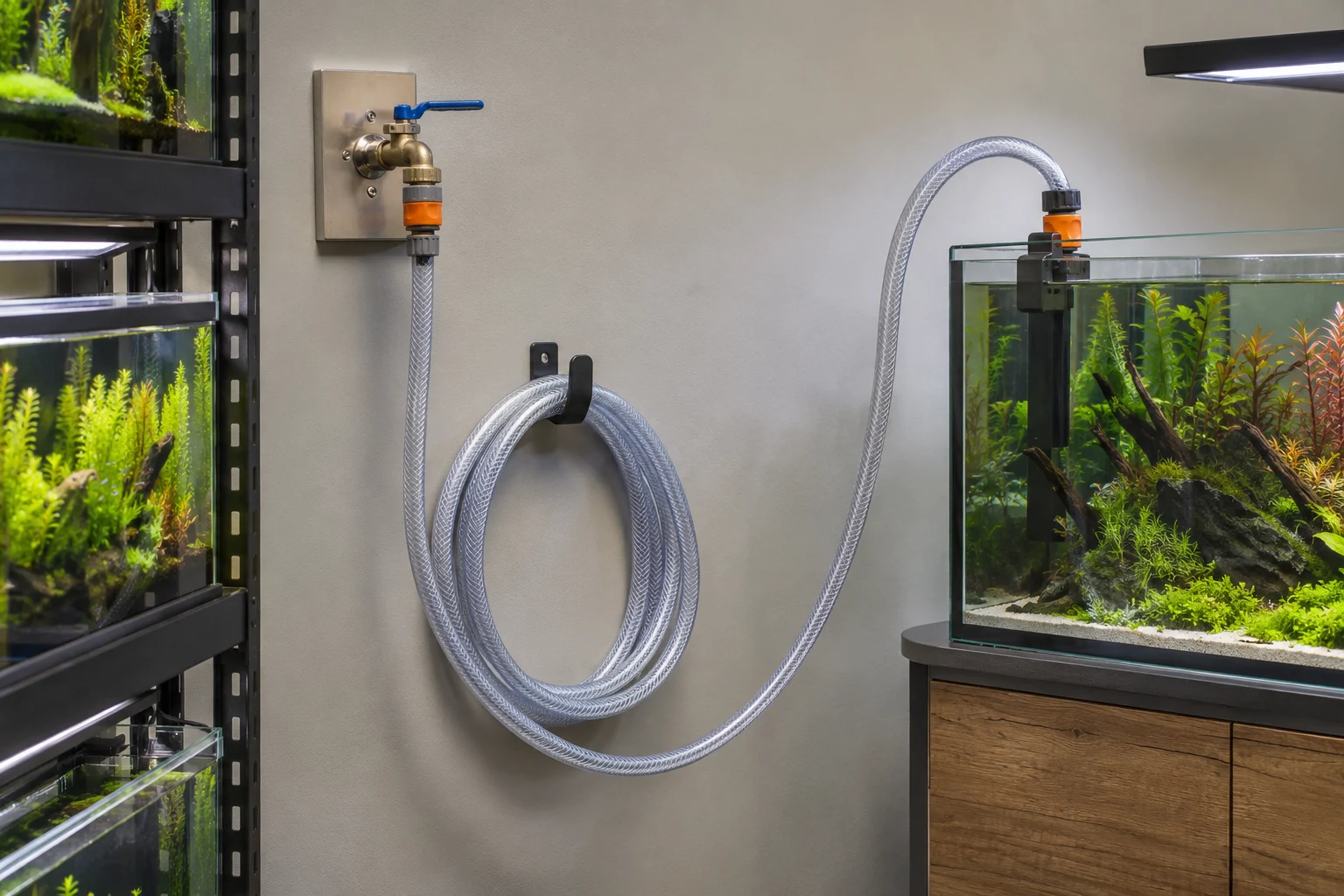
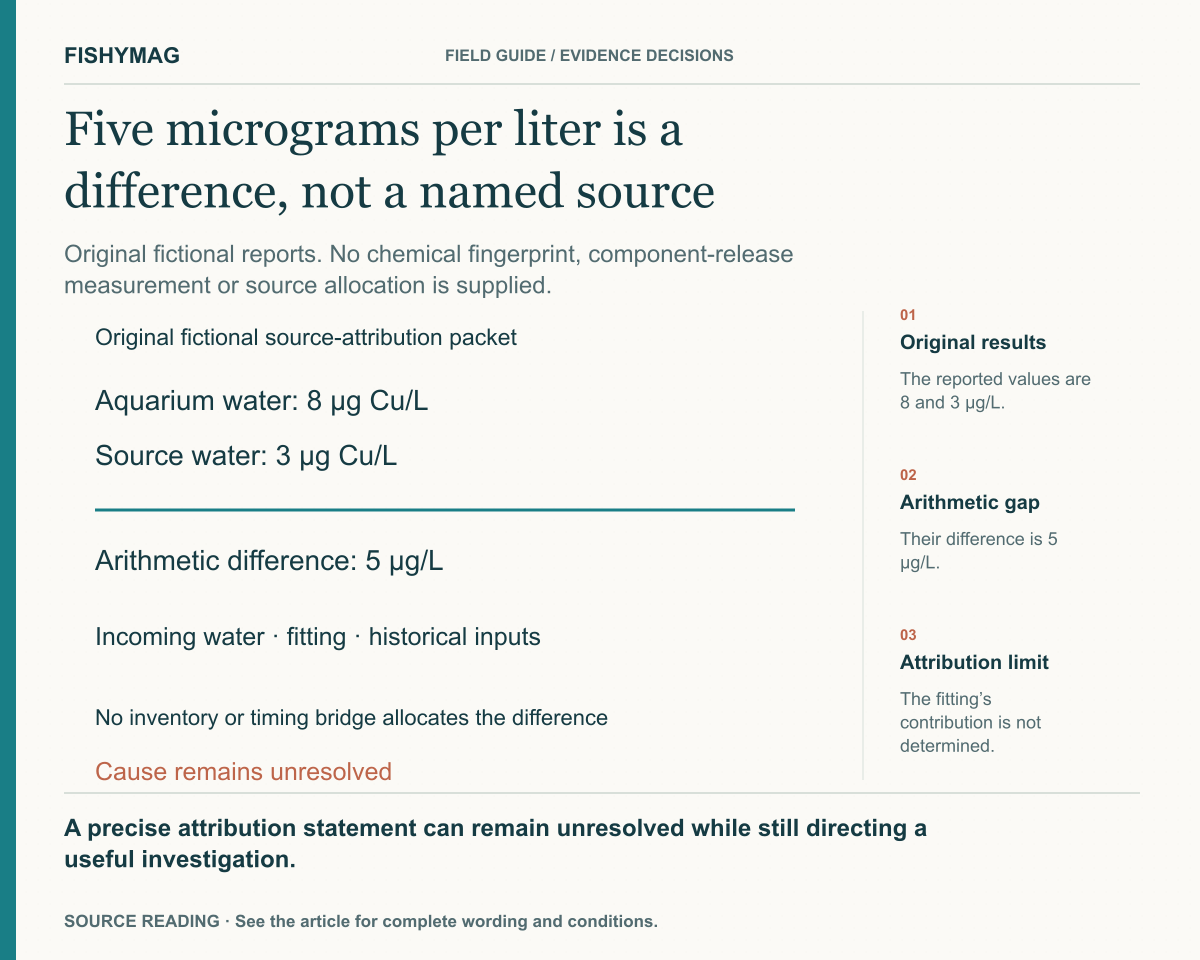
Figure data and explanation
Original fictional reports. No chemical fingerprint, component-release measurement or source allocation is supplied.
- Original results
- The reported values are 8 and 3 µg/L.
- Arithmetic gap
- Their difference is 5 µg/L.
- Attribution limit
- The fitting’s contribution is not determined.
A precise attribution statement can remain unresolved while still directing a useful investigation.
A difference is not a source fingerprint
The case contains a fictional aquarium report of 8 µg Cu/L and a source-water result of 3 µg Cu/L. Even if the numbers are on a common elemental basis, their difference is not automatically material released by the nearest metal-looking component. The packet lacks the water history and sample comparability needed to make that allocation.
Rank the missing evidence by what it distinguishes
The following order prioritizes questions that could separate the actual alternatives, rather than ranking which object looks most suspicious.
| Evidence request | Alternative it can distinguish | Current finding |
|---|---|---|
| Original paired method, fraction, time and uncertainty records | Analytical difference versus noncomparable reports | Open |
| Documented input and transfer history | Incoming or historical contributions versus a new source | Open |
| Fitting material, finish, location and contact history | Whether the nominated component is even represented by a study | Open |
| Relevant system inventory and other candidate inputs | Concentration difference versus allocated amount | Open |
| A validated source-specific signature, if proposed | One candidate source versus other sources with similar elements | No such evidence supplied |
Write the completed attribution statement
“Copper was reported in the specified water fraction. The numerical aquarium/source-water difference is 5 µg/L; its cause and allocation are unresolved.” That statement does not accuse a supplier or claim that an unmeasured compartment contains copper. Corrosion research on a named alloy cannot by itself identify the source of an aquarium detection. Further comparisons should use laboratory-approved sampling plans and relevant component documentation, rather than an improvised removal or exposure trial.
Use your own details
A metal detection does not identify its aquarium source worksheet
Download the editable text file, fill it in on your device and keep it with the relevant record. This blank worksheet records your information; it does not verify entries or approve treatment.
- Aquarium and source-water sample identities
- Methods, fractions, limits and uncertainties
- Collection dates and relevant water history
- Operating volume and transfers if an inventory is needed
- Candidate fitting identity, finish and contact record
- Historical inputs and other plausible pathways
- Evidence request that distinguishes alternatives
- Bounded attribution statement
Put it into practice
Your checklist
- Retain the numerical difference without assigning it to hardware.
- Prioritize evidence that distinguishes the actual alternatives.
- Keep source attribution separate from a detection report.
Sources and scope
This article distinguishes manufacturer statements from FishyMag’s own workflows and arithmetic examples. Linked formulation records retain their own evidence dates; publishing this article does not refresh those records.
- US EPA Method 200.8 revision 5.4 (1994); reviewed November 9, 2026 ↗
- Australian and New Zealand guidelines: water-quality data analysis; reviewed November 8, 2026 ↗
- Primary Cu-Ni90/10 Arabian seawater corrosion study (2024); reviewed November 9, 2026 ↗
AI-assisted writing and development. Not hands-on product testing or veterinary review. How we publish →
FishyMag reports what manufacturers say, quoted and linked. It does not diagnose illness or recommend a treatment, and it never infers that a product is safe from the absence of a warning — where no statement exists, it says so.
Formulations change. Always read the label on the bottle in your hand, and contact the manufacturer if your tank contains anything valuable or unusual.