Evidence decisions
The free and total modes of an aquarium ammonia test
Trace Seachem MultiTest’s documented free- and total-ammonia claims before comparing a sensor result with a laboratory total.
By FishyMag · Published
Manufacturer-source commentary · Not a clinical review or treatment recommendation.
Quick answer
Keep the test mode with the result. Seachem describes MultiTest’s free mode as NH₃-only and its total mode as NH₃ plus NH₄⁺. Its gas-exchange technology claim does not make a free-mode result a total-ammonia result, or show that two different numbers disagree.
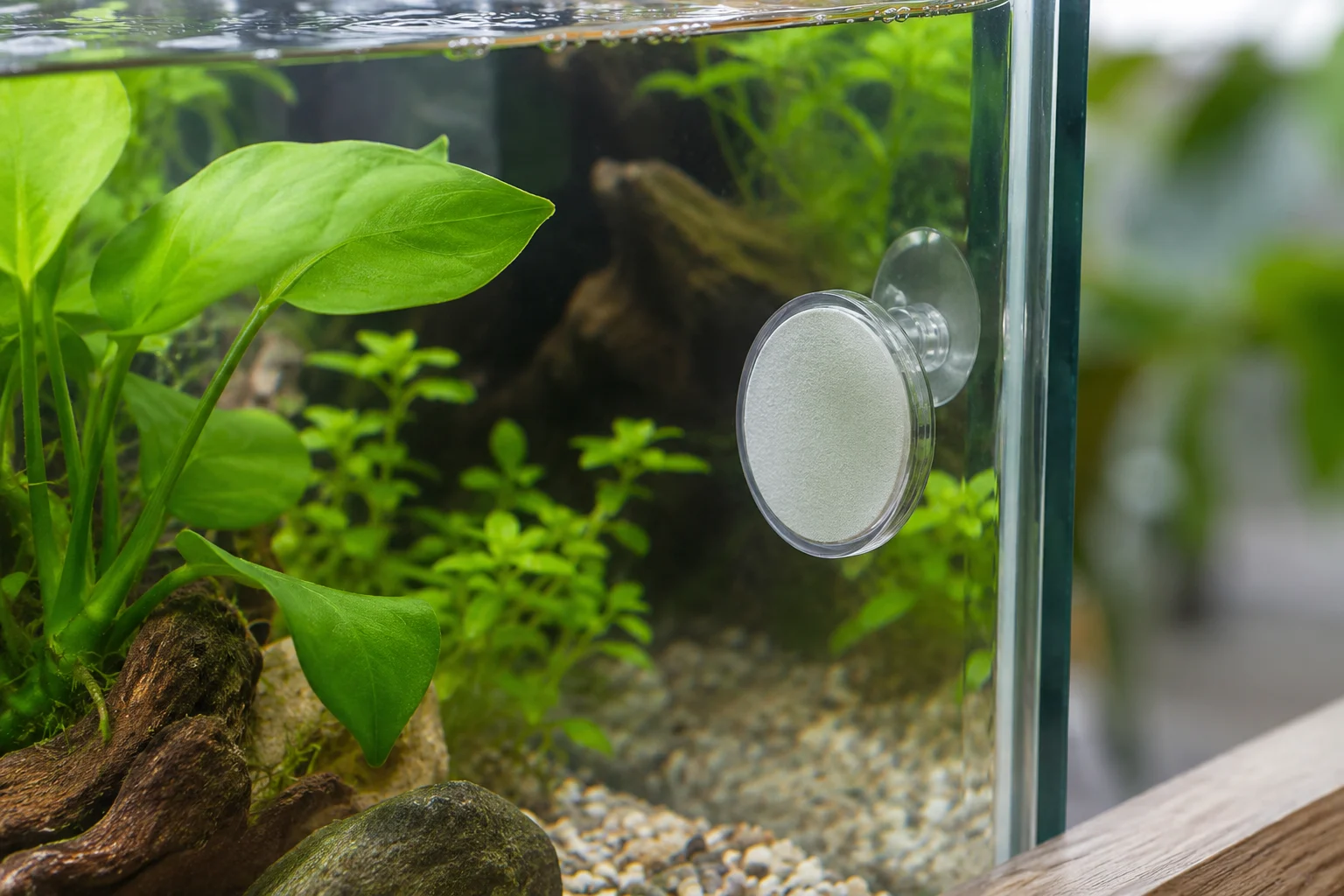
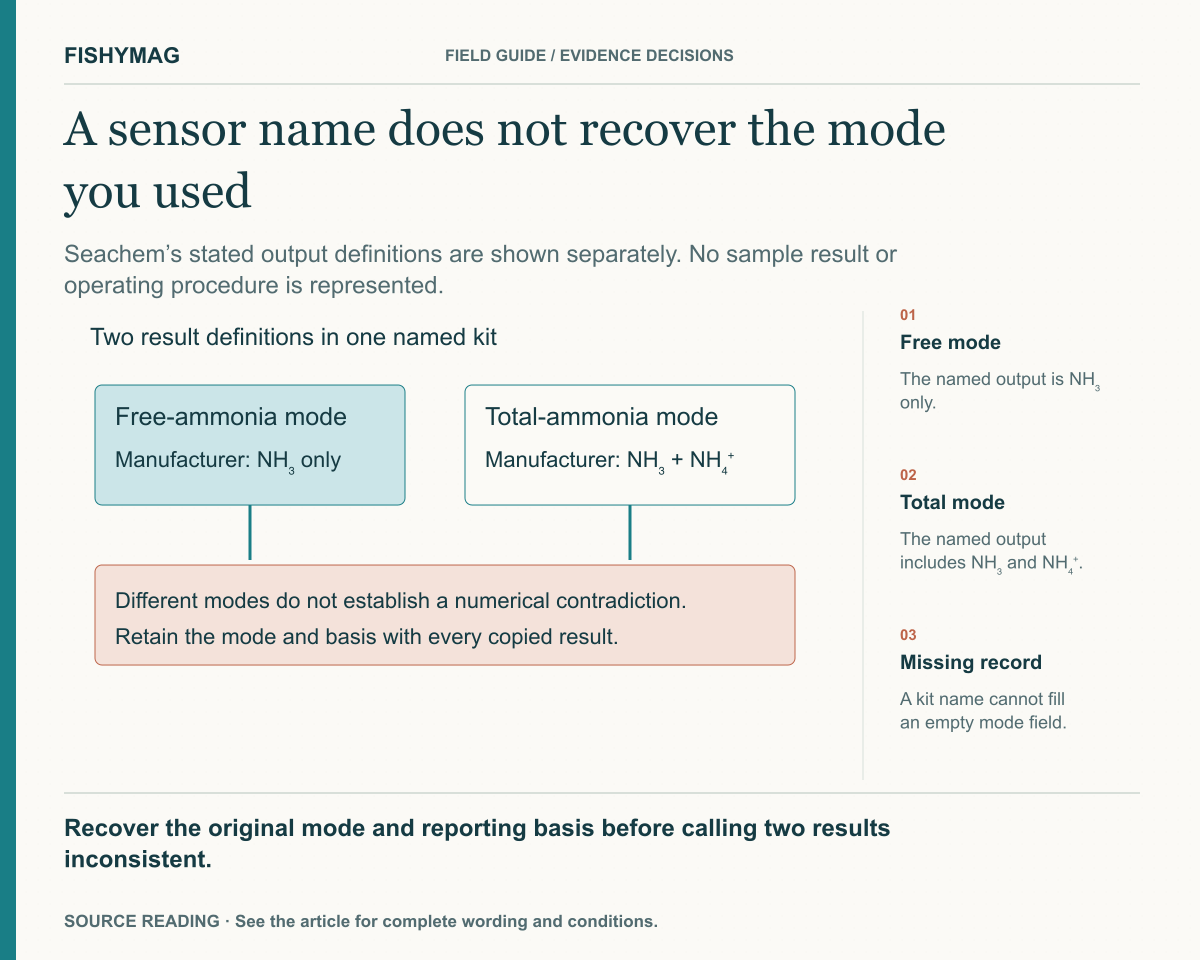
Figure data and explanation
Seachem’s stated output definitions are shown separately. No sample result or operating procedure is represented.
- Free mode
- The named output is NH₃ only.
- Total mode
- The named output includes NH₃ and NH₄⁺.
- Missing record
- A kit name cannot fill an empty mode field.
Recover the original mode and reporting basis before calling two results inconsistent.
The sensing claim and the reported quantity are separate
Seachem attributes its ammonia sensors to gas-exchange technology. It separately identifies free and total modes in MultiTest. This page does not infer an undocumented membrane composition, transport rate or response to every aquarium additive. The useful distinction is the named output: a free reading and a total reading answer different analytical questions. The manufacturer’s selectivity claim also remains attributed to the manufacturer.
Read a fictional comparison packet
A keeper’s saved note says “low ammonia” but its mode field was left empty. A second file identifies total ammonia as nitrogen. Neither the first note’s missing mode nor its chemical basis can be reconstructed from the colour of the aquarium water or from the fact that a sensor was present.
| Evidence item | Established | Still missing | Completed interpretation |
|---|---|---|---|
| Kit page | Two ammonia modes are described | Which mode the keeper used | Do not assign a mode from kit identity |
| Keeper note | “Low ammonia” was written | Mode, original scale and basis | Retain as incomplete observation |
| Laboratory report | Total ammonia as N | Comparable sensor record | No numerical agreement test is possible |
Recover the signal-to-result record
For a real comparison, locate the original test instructions, mode, colour scale or instrument output, sample identity and observation time. Ask whether the recorded output is direct, converted or separately processed. Keep the reporting basis explicit before attempting arithmetic. The completed finding in this case is an incomplete comparison, not a malfunction: the supplied keeper note lacks information needed to establish its measurand. If the original record is recovered, add it with provenance rather than rewriting the old note as though it had always been complete. No sensor photograph authenticates a sample or proves an instrument result.
Use your own details
The free and total modes of an aquarium ammonia test worksheet
Download the editable text file, fill it in on your device and keep it with the relevant record. This blank worksheet records your information; it does not verify entries or approve treatment.
- Sample identity and time
- Test and mode used
- Original displayed quantity
- Chemical reporting basis
- Applicable source and revision
- Other method and sample match
- Supported comparison
- Specific unresolved evidence
Put it into practice
Your checklist
- Record the actual free or total mode used.
- Separate manufacturer sensor claims from the copied result.
- Resolve missing output definitions before comparing numbers.
Sources and scope
This article distinguishes manufacturer statements from FishyMag’s own workflows and arithmetic examples. Linked formulation records retain their own evidence dates; publishing this article does not refresh those records.
- Seachem MultiTest Ammonia manufacturer page; reviewed November 8, 2026 ↗
- Seachem Ammonia Alert manufacturer page; reviewed November 8, 2026 ↗
- EPA Method 350.1, Revision 2.0; reviewed November 8, 2026 ↗
AI-assisted writing and development. Not hands-on product testing or veterinary review. How we publish →
FishyMag reports what manufacturers say, quoted and linked. It does not diagnose illness or recommend a treatment, and it never infers that a product is safe from the absence of a warning — where no statement exists, it says so.
Formulations change. Always read the label on the bottle in your hand, and contact the manufacturer if your tank contains anything valuable or unusual.