Evidence decisions
A seawater corrosion study does not supply an aquarium fitting’s release rate
Crosswalk an accessible Cu-Ni coupon study against a fictional aquarium hardware dossier, retaining the alloy mismatch and the difference between corrosion loss and dissolved release.
By FishyMag · Published
FishyMag editorial workflow · Not a clinical review or treatment recommendation.
Quick answer
The cited Cu-Ni 90/10 study does not quantify copper release from the fictional fitting described as 316 stainless steel. Material identity already mismatches, while finish and water-contact history are missing. A corrosion-loss result also cannot simply be relabelled dissolved copper concentration in an aquarium.
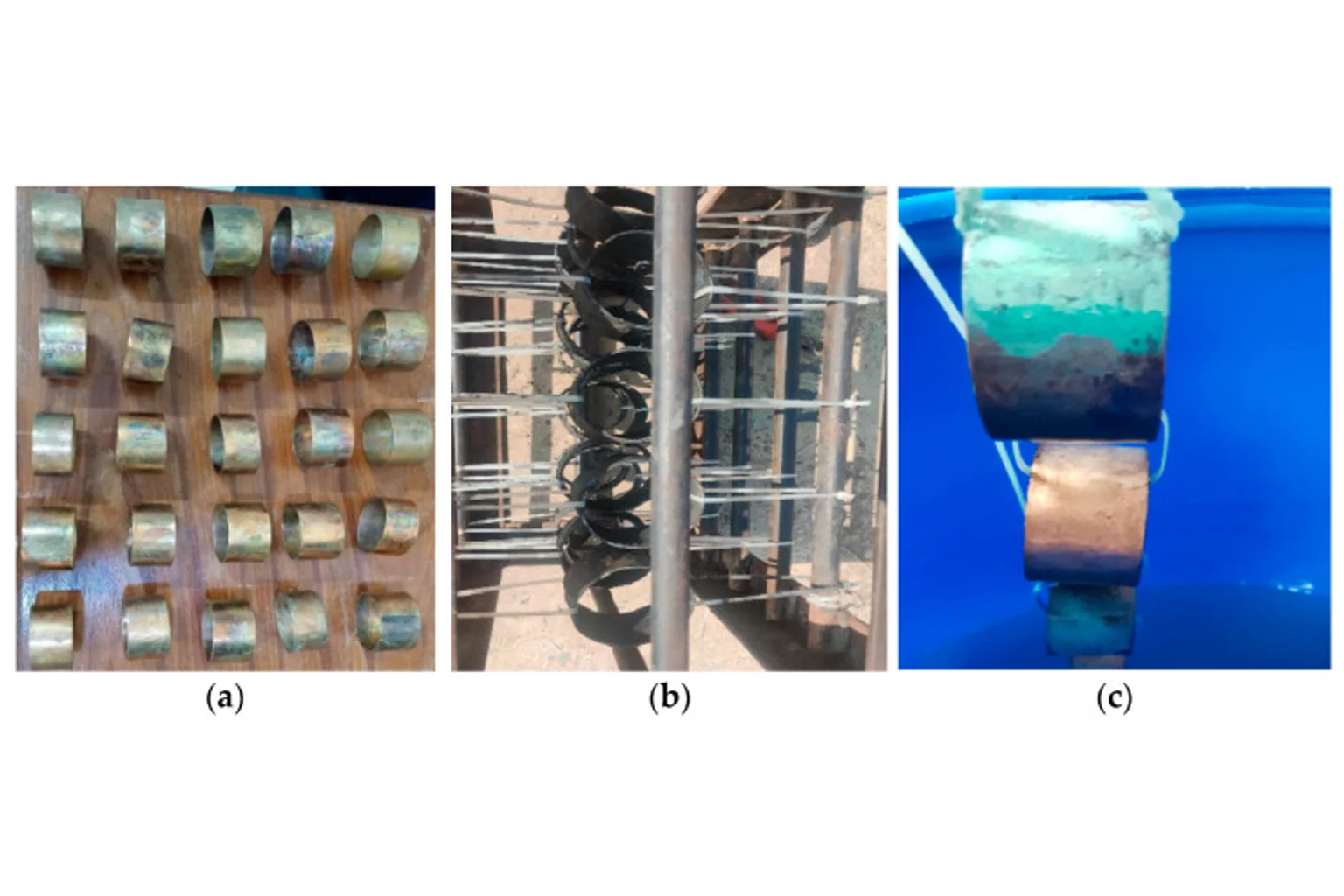
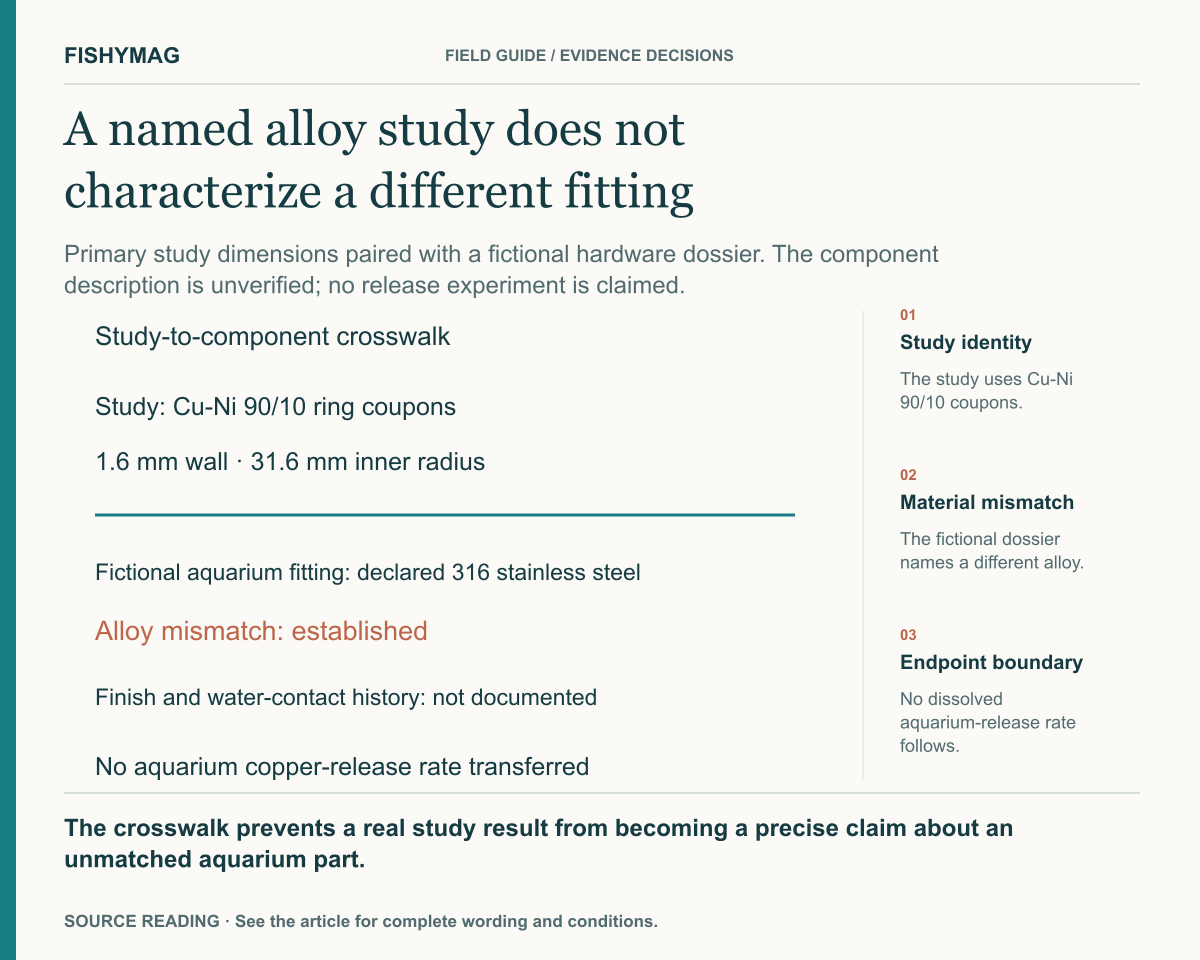
Figure data and explanation
Primary study dimensions paired with a fictional hardware dossier. The component description is unverified; no release experiment is claimed.
- Study identity
- The study uses Cu-Ni 90/10 coupons.
- Material mismatch
- The fictional dossier names a different alloy.
- Endpoint boundary
- No dissolved aquarium-release rate follows.
The crosswalk prevents a real study result from becoming a precise claim about an unmatched aquarium part.
Retain the study’s actual material and endpoint
The primary Arabian seawater study uses prepared Cu-Ni 90/10 ring coupons cut from pipe with a 1.6 mm wall and 31.6 mm inner radius. Its natural-seawater tank and polluted-harbor exposures are identified separately. Those material and exposure facts are part of the evidence. Corrosion loss and corrosion-product characterization do not directly supply a dissolved-copper release coefficient for an arbitrary aquarium component.
Complete the fictional hardware match
The constructed hardware dossier contains a supplier description of 316 stainless steel, but no verified finish or actual water-contact history. It is not a claim about a real supplier or a tested aquarium fitting.
| Match field | Study evidence | Fictional component | Decision |
|---|---|---|---|
| Material | Cu-Ni 90/10 | Supplier description: 316 stainless steel | Mismatch |
| Geometry | Defined ring coupons | Fitting area and geometry not documented | Unresolved |
| Surface finish | Specified prepared coupon surface | Not supplied | Unresolved |
| Exposure | Separate seawater study environments | Contact and water history missing | Unresolved |
| Requested endpoint | Corrosion behavior under study conditions | Dissolved Cu contribution to aquarium water | No quantitative transfer supported |
Ask for the smallest missing component evidence
Obtain the actual material identity, finish or coating, wetted geometry and relevant contact record. Only then assess whether an applicable release study or manufacturer statement exists for the requested endpoint. The alloy mismatch prevents a numerical transfer now; missing conditions add further limits. This does not prove that the fitting released nothing or that it released copper. No removal plan, chemical challenge test or predicted aquarium concentration is supplied.
Use your own details
A seawater corrosion study does not supply an aquarium fitting’s release rate worksheet
Download the editable text file, fill it in on your device and keep it with the relevant record. This blank worksheet records your information; it does not verify entries or approve treatment.
- Study material grade and source
- Test finish and geometry
- Study water and exposure conditions
- Actual component identity and verification status
- Component finish, area and water contact
- Alloy or condition mismatch
- Corrosion loss versus dissolved-element release endpoint
- Minimum documents needed to revisit applicability
Put it into practice
Your checklist
- Match alloy, finish and geometry before using a study.
- Keep corrosion loss separate from dissolved release.
- Do not assign a component rate when the match fails.
Sources and scope
This article distinguishes manufacturer statements from FishyMag’s own workflows and arithmetic examples. Linked formulation records retain their own evidence dates; publishing this article does not refresh those records.
- Primary Cu-Ni90/10 Arabian seawater corrosion study (2024); reviewed November 9, 2026 ↗
- US EPA Method 200.8 revision 5.4 (1994); reviewed November 9, 2026 ↗
AI-assisted writing and development. Not hands-on product testing or veterinary review. How we publish →
FishyMag reports what manufacturers say, quoted and linked. It does not diagnose illness or recommend a treatment, and it never infers that a product is safe from the absence of a warning — where no statement exists, it says so.
Formulations change. Always read the label on the bottle in your hand, and contact the manufacturer if your tank contains anything valuable or unusual.