Keeper workflows
When source-water changes undermine a fixed preparation assumption
Compare three fictional source-water batch records with a fixed composition assumption without inventing a seasonal cause or compensating additions.
By FishyMag · Published
Original evidence-and-batch case · Not a clinical review or treatment recommendation.
Quick answer
The fictional batch-linked chloride values are 20, 35 and 50 mg/L. Against a fixed 30 mg/L assumption, they differ by −10, +5 and +20 mg/L. If their methods and sampling scope are comparable, the records do not support treating every input batch as 30 mg/L. Three points do not establish a seasonal cause.

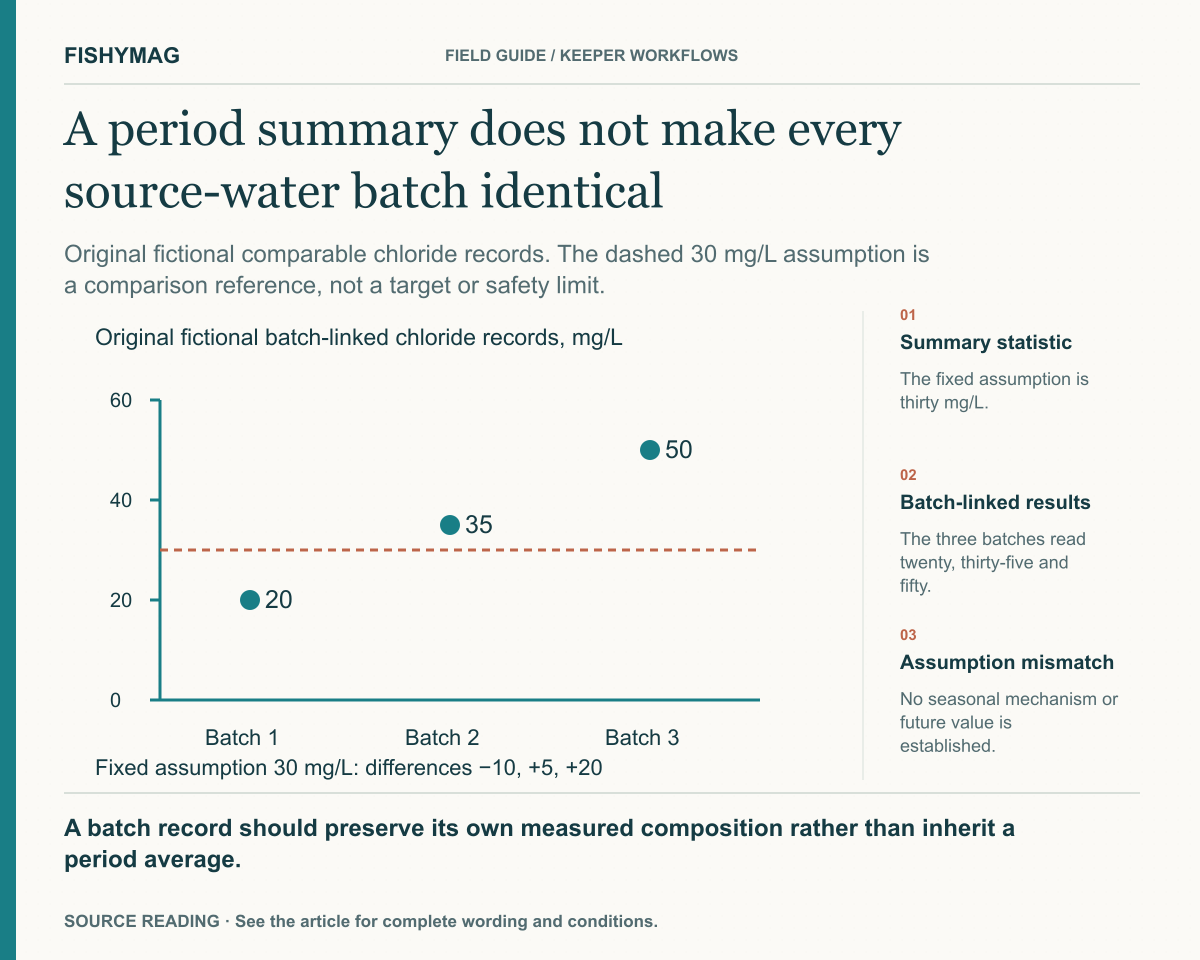
Figure data and explanation
Original fictional comparable chloride records. The dashed 30 mg/L assumption is a comparison reference, not a target or safety limit.
- Summary statistic
- The fixed assumption is thirty mg/L.
- Batch-linked results
- The three batches read twenty, thirty-five and fifty.
- Assumption mismatch
- No seasonal mechanism or future value is established.
A batch record should preserve its own measured composition rather than inherit a period average.
Separate a supplier summary from a batch measurement
This original fictional supplier summary gives 30 mg/L chloride for its stated reporting period. Three separately batch-linked source records give 20, 35 and 50 mg/L on a comparable analytical basis. The summary statistic is not asserted to be a guaranteed minimum, maximum or value for every batch. DuPont’s technical discussion treats feed composition as part of performance context; the batch-minus-assumption audit here is original FishyMag arithmetic, not a measured local water trend.
Complete the assumption check row by row
For the teaching case, collection point and method comparability are stipulated. A real audit must verify them rather than infer comparability from the shared mg/L unit.
| Record | Chloride result | Result minus fixed 30 mg/L | Finding |
|---|---|---|---|
| Supplier period summary | 30 mg/L | Reference assumption | Period statistic, not every-batch assay |
| Batch 1 | 20 mg/L | −10 mg/L | Below the fixed assumption |
| Batch 2 | 35 mg/L | +5 mg/L | Above the fixed assumption |
| Batch 3 | 50 mg/L | +20 mg/L | Above the fixed assumption |
| Every input equals 30 mg/L | Contradicted by the stipulated comparable batch records | No common offset implied | Fixed every-batch proposition not supported |
| Seasonal cause or next batch value | Not established | No prediction calculated | Requires other evidence |
Revise the record’s confidence, not the batch by guesswork
Preserve the supplier’s period definition and each batch’s provenance so future summaries do not silently replace observations with the fixed assumption. If one batch was collected at a different point or analysed on a different basis, resolve that before treating it as a temporal change. The three values do not show why they differ, prove a recurring seasonal cycle or establish the next source-water composition. No compensating chemical addition, blend recipe or biological threshold is proposed. The useful output is the identified assumption mismatch and a precise list of comparability evidence still required.
Use your own details
When source-water changes undermine a fixed preparation assumption worksheet
Download the editable text file, fill it in on your device and keep it with the relevant record. This blank worksheet records your information; it does not verify entries or approve treatment.
- Supplier summary period and statistic
- Exact constituent and reporting basis
- Batch-linked collection identities and dates
- Sample point and collection-window coverage
- Comparable analytical method and qualifiers
- Fixed preparation assumption being audited
- Each result minus the assumption
- Unmeasured causes and future batches
Put it into practice
Your checklist
- Keep period summaries distinct from batch-linked measurements.
- Check method and sample-point comparability before interpreting differences.
- Do not turn three observations into a cause, forecast or correction recipe.
Sources and scope
This article distinguishes manufacturer statements from FishyMag’s own workflows and arithmetic examples. Linked formulation records retain their own evidence dates; publishing this article does not refresh those records.
- DuPont FilmTec RO/NF technical manual, version 20, August 2026; reviewed November 9, 2026 ↗
- FishyMag evidence methodology; reviewed November 8, 2026 ↗
AI-assisted writing and development. Not hands-on product testing or veterinary review. How we publish →
FishyMag reports what manufacturers say, quoted and linked. It does not diagnose illness or recommend a treatment, and it never infers that a product is safe from the absence of a warning — where no statement exists, it says so.
Formulations change. Always read the label on the bottle in your hand, and contact the manufacturer if your tank contains anything valuable or unusual.