Evidence literacy
Were the aquariums randomized, or just the fish?
Read three separate allocation records in a fictional eight-tank study and identify exactly which stage was randomized.
By FishyMag · Published
Original research-appraisal case · Not a clinical review or treatment recommendation.
Quick answer
The fictional record randomizes fish among tanks and shuffles video clips before scoring. It assigns exposure A to tanks 1 to 4 and the comparator to tanks 5 to 8 by rack position. Neither randomized fish allocation nor clip order documents random exposure assignment.
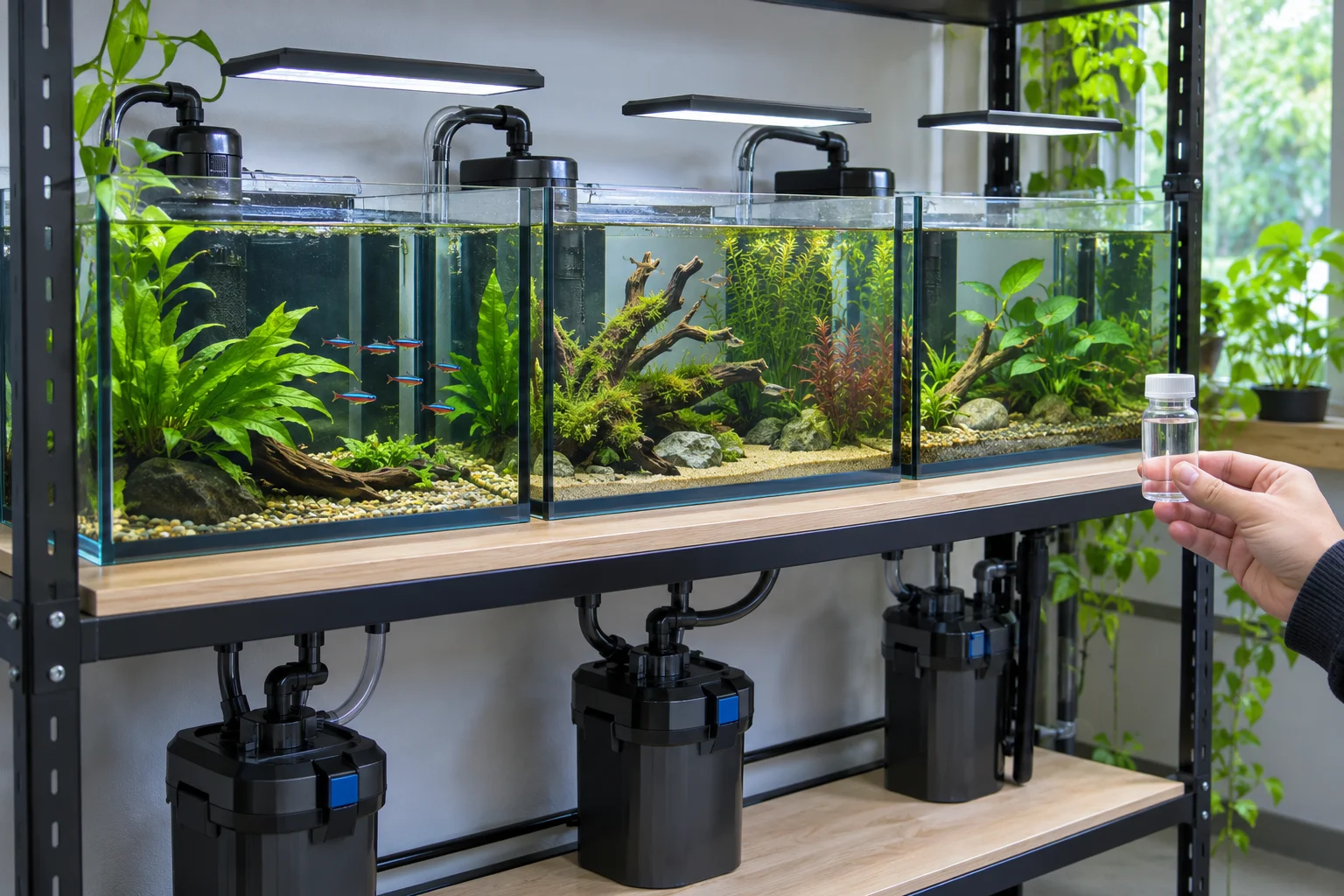
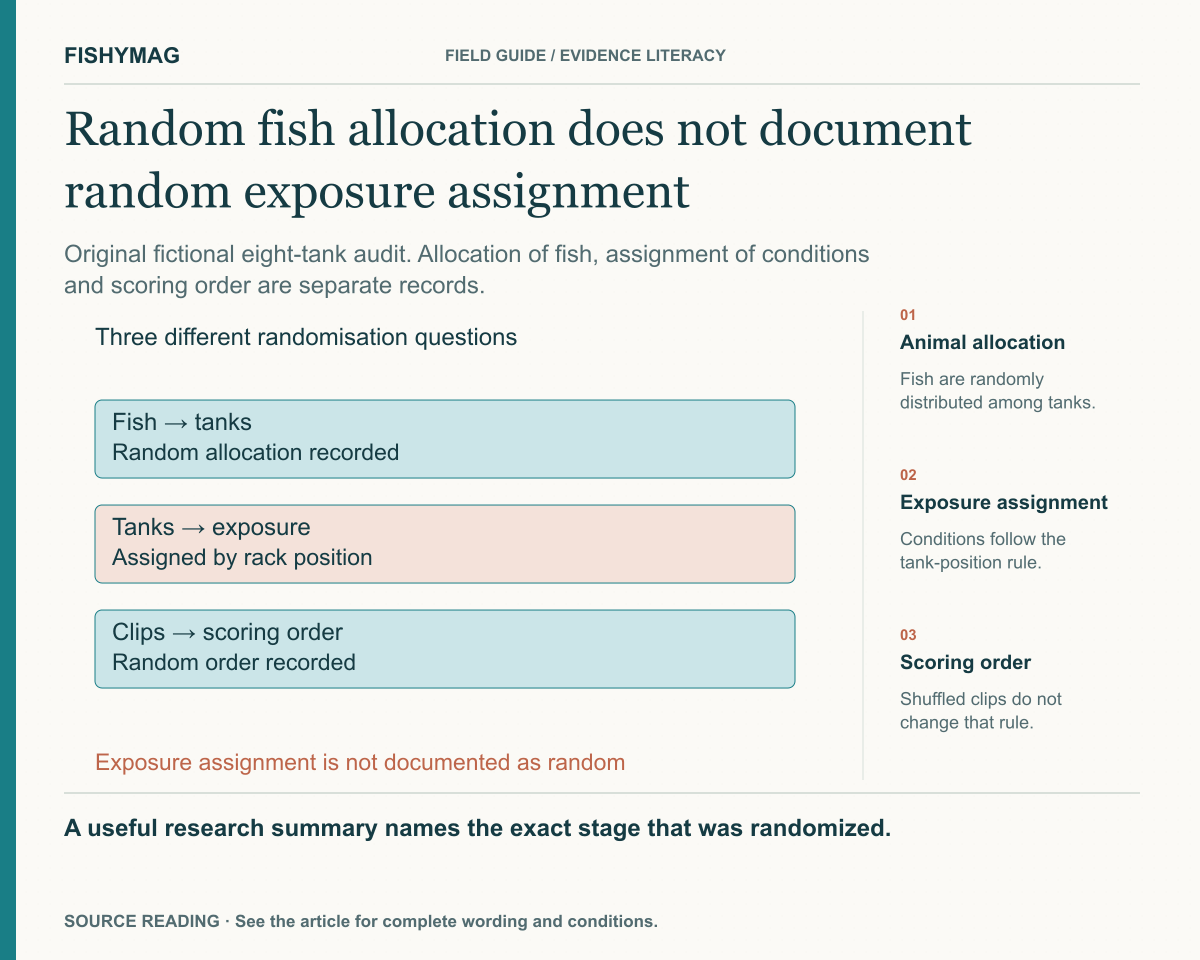
Figure data and explanation
Original fictional eight-tank audit. Allocation of fish, assignment of conditions and scoring order are separate records.
- Animal allocation
- Fish are randomly distributed among tanks.
- Exposure assignment
- Conditions follow the tank-position rule.
- Scoring order
- Shuffled clips do not change that rule.
A useful research summary names the exact stage that was randomized.
Keep the verb attached to its object
“Randomized” needs an answer to “what was randomized?” ARRIVE asks for the allocation method and the entity involved. A paper can randomize one stage and use a fixed rule at another. In this fictional record, eight tanks exist before condition assignment. Fish are distributed randomly among them. The exposure list then puts all A tanks on one part of the rack and all comparator tanks on another. The scorer later receives clips in random order.
Read the three records separately
The completed audit below does not infer a random allocation sequence from a balanced number of tanks. Four tanks per group is a count, not an assignment method.
| Stage | Fictional record | Supported wording |
|---|---|---|
| Animals to tanks | Random distribution documented | Animal allocation randomized as recorded |
| Tanks to condition | Tanks 1 to 4 A; 5 to 8 comparator by position | Exposure assignment follows a position rule |
| Video scoring order | Clips shuffled using a recorded sequence | Scoring order randomized |
| Exposure randomization claim | No random condition sequence supplied | Not established by this packet |
| What would close the gap? | Dated tank-to-condition sequence and generation method | Assess the exposure stage itself |
Preserve the location question without inventing its effect
Rack position is aligned with exposure in this case. That raises a question about separating exposure from location-related differences, but the audit has not measured a light, temperature or handling gradient. Do not invent one or assert that it caused the result. The correction to a summary is narrower: animal allocation and scoring order were randomized; exposure assignment was positional. If a later tank-assignment record establishes a different process, retain its version and reconcile the conflict rather than silently rewriting the original record. No statistical significance or compatibility verdict follows from this allocation audit alone.
Use your own details
Were the aquariums randomized, or just the fish? worksheet
Download the editable text file, fill it in on your device and keep it with the relevant record. This blank worksheet records your information; it does not verify entries or approve treatment.
- Exposure unit and tank roster
- Animal-to-tank allocation method
- Tank-to-condition allocation method
- Rack or location assignment
- Scoring-order method
- Sequence-generation record and date
- Who held the allocation key
- Conclusion supported at each stage
Put it into practice
Your checklist
- Name the randomized entity at every stage.
- Do not use equal group size as evidence of random assignment.
- Keep possible location effects separate from measured effects.
Sources and scope
This article distinguishes manufacturer statements from FishyMag’s own workflows and arithmetic examples. Linked formulation records retain their own evidence dates; publishing this article does not refresh those records.
AI-assisted writing and development. Not hands-on product testing or veterinary review. How we publish →
FishyMag reports what manufacturers say, quoted and linked. It does not diagnose illness or recommend a treatment, and it never infers that a product is safe from the absence of a warning — where no statement exists, it says so.
Formulations change. Always read the label on the bottle in your hand, and contact the manufacturer if your tank contains anything valuable or unusual.