Keeper workflows
A named aquarium ingredient may still be a mixture
Distinguish a measured tea tree oil composition from a single terpinen-4-ol reference and from an aquarium formulation.
By FishyMag · Published
Worked formulation evidence example · Not a clinical review or treatment recommendation.
Quick answer
A commercial tea tree oil sample can contain terpinen-4-ol and several other measured constituents. A property of pure terpinen-4-ol does not establish the same property for that oil or for a formulated aquarium product. Keep each material and lot separate.
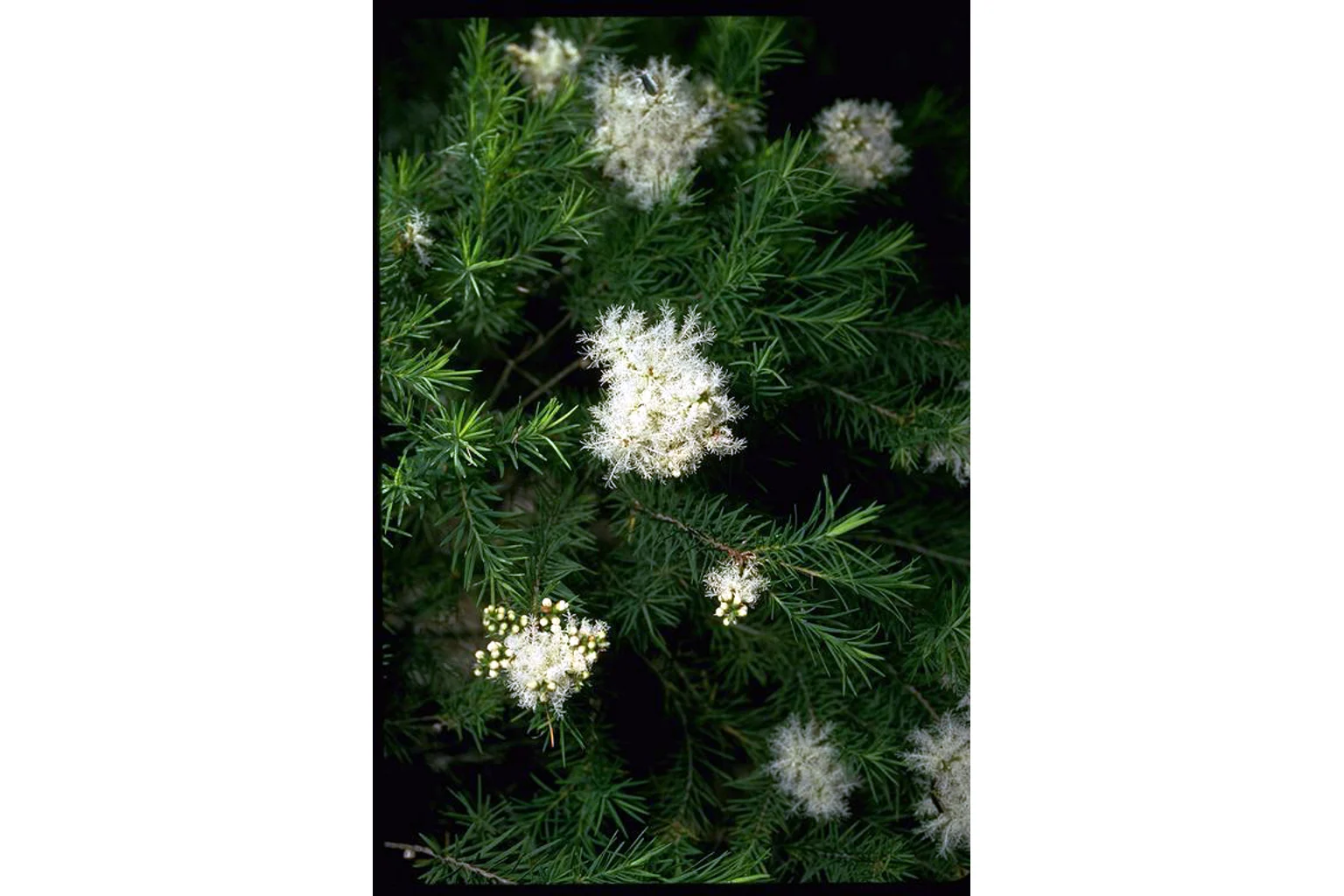
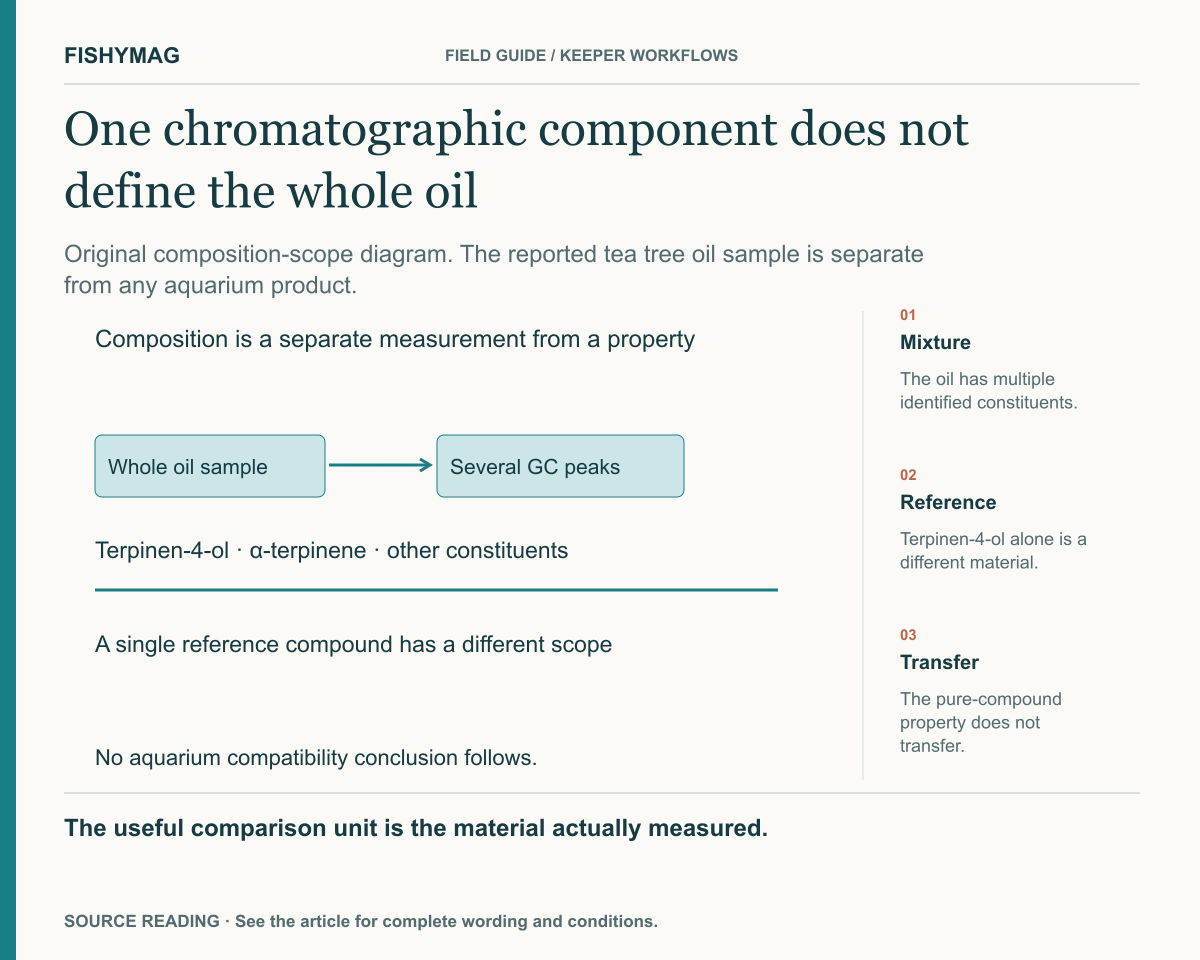
Figure data and explanation
Original composition-scope diagram. The reported tea tree oil sample is separate from any aquarium product.
- Mixture
- The oil has multiple identified constituents.
- Reference
- Terpinen-4-ol alone is a different material.
- Transfer
- The pure-compound property does not transfer.
The useful comparison unit is the material actually measured.
Keep the plant, research oil and product as separate records
A primary study of Melaleuca alternifolia analysed a commercial tea tree oil sample by gas chromatography and reported several monoterpenes, including terpinen-4-ol and α-terpinene. API Fishcare uses the term Melaleuca or tea tree extract in its own product description. The research sample is not identified as that product or as its ingredient lot.
Check a proposed transfer at the material level
The fictional request asks whether a pure terpinen-4-ol property can be printed as a whole-oil property. A component-level measurement and a GC composition table answer different questions.
| Record | What was identified | What remains outside scope |
|---|---|---|
| Pure terpinen-4-ol reference | Single specified compound | Mixture property not measured |
| Commercial oil in published study | Multiple chromatographic components in one sample | Other batches, unmeasured constituents and formulated product |
| Aquarium product ingredient description | Manufacturer’s ingredient wording | No match to the tested research sample |
| Transfer verdict | Pure reference property proposed for whole oil | Unsupported without applicable mixture evidence |
Keep the useful chemical identity without making it a compatibility claim
A composition report may make the botanical ingredient description more informative, especially when the lot and detector basis are clear. It cannot transfer a single constituent’s solubility, partitioning or biological result to the whole mixture. Leave the full formulation and batch comparison unresolved when those records are missing.
Use your own details
A named aquarium ingredient may still be a mixture worksheet
Download the editable text file, fill it in on your device and keep it with the relevant record. This blank worksheet records your information; it does not verify entries or approve treatment.
- Botanical source and plant part if known
- Exact lot and material definition
- Composition method and named constituents
- Reported percent or detector basis
- Single-compound reference and measured property
- What is known about the compared formulation
- Transfer decision and missing batch evidence
Put it into practice
Your checklist
- Identify the measured material and batch.
- Separate chromatographic composition from a single-compound property.
- Do not apply a pure-compound property to a mixture without evidence.
Sources and scope
This article distinguishes manufacturer statements from FishyMag’s own workflows and arithmetic examples. Linked formulation records retain their own evidence dates; publishing this article does not refresh those records.
- Primary GC characterization of a commercial tea tree oil sample; reviewed November 9, 2026 ↗
- API Fishcare ingredient description for Melaleuca; reviewed November 9, 2026 ↗
- FishyMag evidence methodology; reviewed November 8, 2026 ↗
AI-assisted writing and development. Not hands-on product testing or veterinary review. How we publish →
FishyMag reports what manufacturers say, quoted and linked. It does not diagnose illness or recommend a treatment, and it never infers that a product is safe from the absence of a warning — where no statement exists, it says so.
Formulations change. Always read the label on the bottle in your hand, and contact the manufacturer if your tank contains anything valuable or unusual.