Keeper workflows
Pump flow is not aquarium exchange
Count flows across the display boundary while excluding a circulation pump that moves water only within the display.
By FishyMag · Published
Worked hydraulic example · Not a clinical review or treatment recommendation.
Quick answer
The display receives 500 L/h from the sump and drains 500 L/h back under the stated steady conditions. The 1,200 L/h circulation loop stays inside the display. Adding it would overstate display-to-sump exchange by 1,200 L/h.
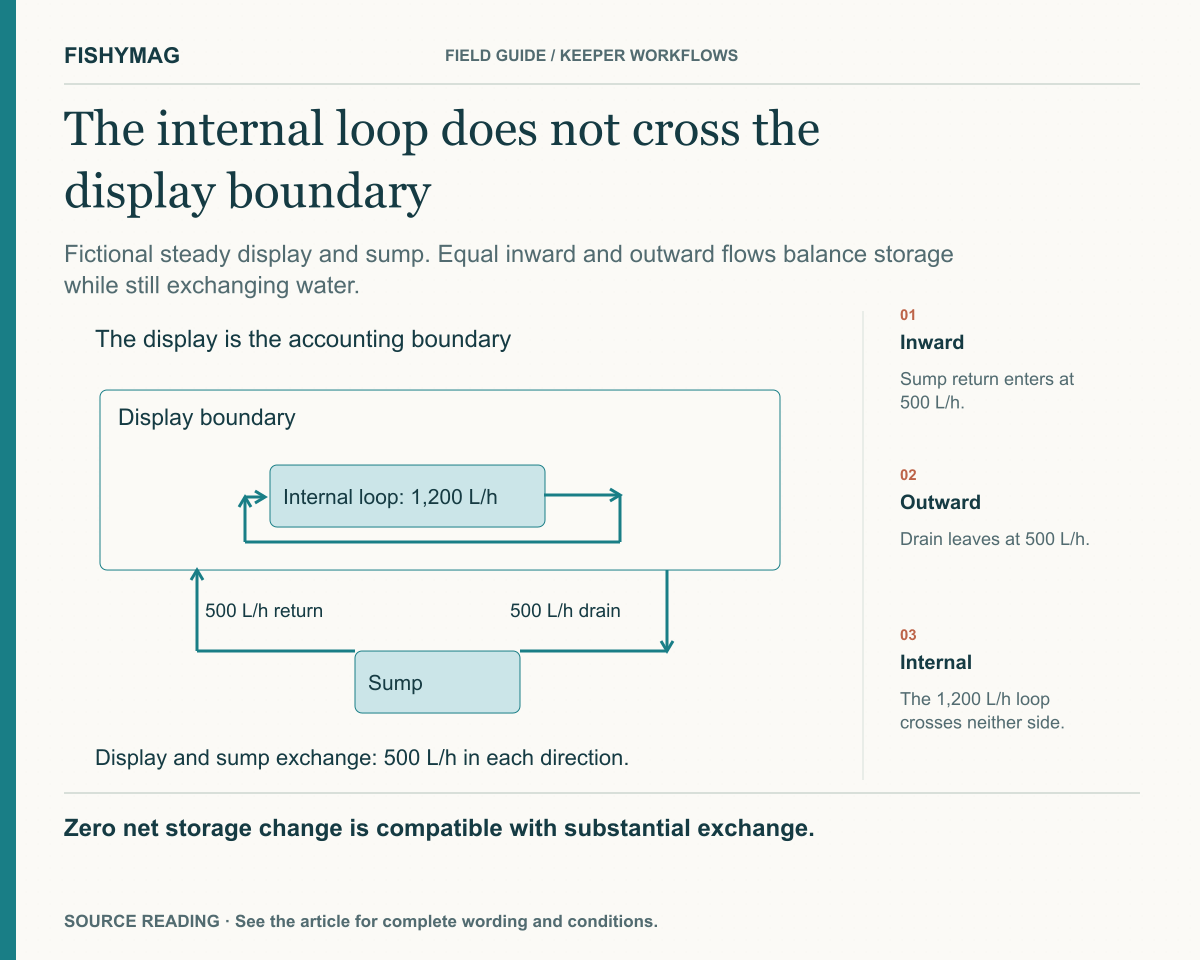
Figure data and explanation
Fictional steady display and sump. Equal inward and outward flows balance storage while still exchanging water.
- Inward
- Sump return enters at 500 L/h.
- Outward
- Drain leaves at 500 L/h.
- Internal
- The 1,200 L/h loop crosses neither side.
Zero net storage change is compatible with substantial exchange.
Name the boundary before reading the pump list
The fictional record draws its line around the display only. A return takes water from the sump and delivers 500 L/h inside that line. A drain carries the same amount outward during the steady window. A separate pump takes water from and returns it to the display at 1,200 L/h. Unlike a nameplate value, these fictional figures are declared operating flows for a single documented state.
Complete the boundary ledger
Count inward and outward rates separately. A balanced water inventory does not mean no water crosses.
| Movement | Inside or across? | Contribution |
|---|---|---|
| Sump return | Crosses inward | 500 L/h entering |
| Drain | Crosses outward | 500 L/h leaving |
| Circulation pump | Both ends inside | 0 L/h across this boundary |
| Net storage change | In minus out | 0 L/h in the recorded state |
| Exchange description | Paired inward and outward flows | 500 L/h in each direction |
Use the ledger for the next configuration
A pump list would sum 500 and 1,200 to give 1,700 L/h, a total of two unlike roles in this audit. A different boundary might count different pipes; for example, both sump return and drain become internal to a line enclosing the whole system. If the water level is changing or an extra feed enters, preserve those changes instead of forcing equality. The ledger does not establish mixing or exposure throughout either vessel.
Use your own details
Pump flow is not aquarium exchange worksheet
Download the editable text file, fill it in on your device and keep it with the relevant record. This blank worksheet records your information; it does not verify entries or approve treatment.
- Chosen boundary and drawing revision
- Each pump intake location
- Each pump discharge location
- Actual operating flow record and time
- Inward flows
- Outward flows
- Internal flows excluded from boundary totals
- Other flows or changing storage
Put it into practice
Your checklist
- Label intake and discharge for each pump.
- Report actual flows by boundary and direction.
- Keep internal circulation out of the exchange total.
Sources and scope
This article distinguishes manufacturer statements from FishyMag’s own workflows and arithmetic examples. Linked formulation records retain their own evidence dates; publishing this article does not refresh those records.
- US EPA EPANET 2.2 manual, network components and hydraulic equations; reviewed November 9, 2026 ↗
- US Bureau of Reclamation Water Measurement Manual, changing flow conditions; reviewed November 9, 2026 ↗
- Red Sea REEFER series manual v19A, water management system; reviewed November 9, 2026 ↗
AI-assisted writing and development. Not hands-on product testing or veterinary review. How we publish →
FishyMag reports what manufacturers say, quoted and linked. It does not diagnose illness or recommend a treatment, and it never infers that a product is safe from the absence of a warning — where no statement exists, it says so.
Formulations change. Always read the label on the bottle in your hand, and contact the manufacturer if your tank contains anything valuable or unusual.