Evidence literacy
Was aquarium behaviour measured before exposure?
Map baseline evidence by endpoint in a fictional aquarium report where feeding was observed before exposure but swimming was not.
By FishyMag · Published
Original research-appraisal case · Not a clinical review or treatment recommendation.
Quick answer
The fictional record contains one pre-exposure feeding observation and later swimming scores. Feeding therefore has one documented baseline observation; swimming does not. A reported acclimation phase supplies chronology, not an unreported swimming measurement.
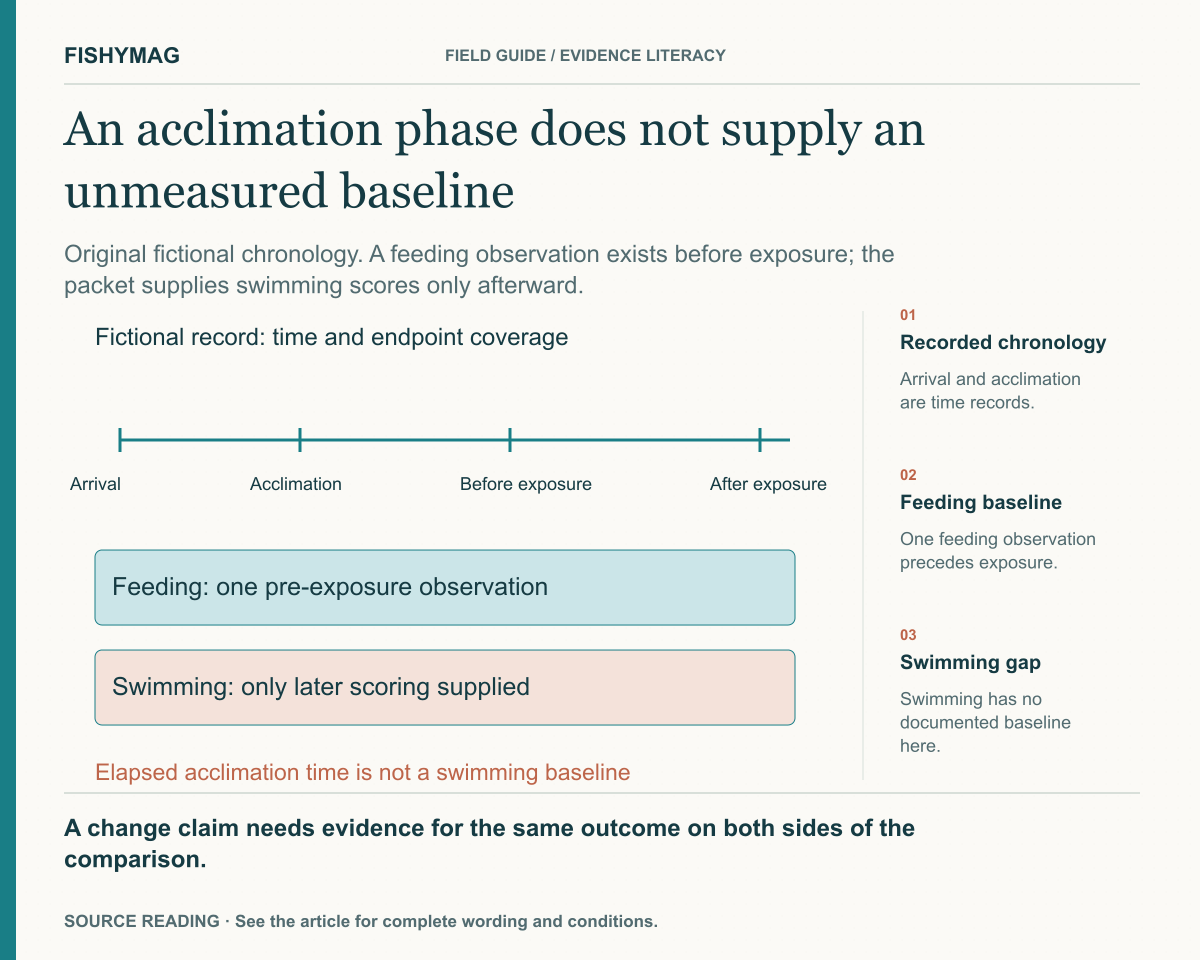
Figure data and explanation
Original fictional chronology. A feeding observation exists before exposure; the packet supplies swimming scores only afterward.
- Recorded chronology
- Arrival and acclimation are time records.
- Feeding baseline
- One feeding observation precedes exposure.
- Swimming gap
- Swimming has no documented baseline here.
A change claim needs evidence for the same outcome on both sides of the comparison.
Ask for a baseline of the same outcome
The paper summary in this original fictional case says swimming behaviour changed after exposure. Its chronology lists arrival, an acclimation phase, one feeding observation before exposure and later swimming scoring. ARRIVE asks for outcome definitions and the timing of procedures and observations. Those reporting details let the reader check which comparison exists. They do not turn the passage of time into a measurement.
Complete the endpoint-by-time matrix
Feeding and swimming are different endpoints in this packet. Nothing states that the feeding observation included a swimming score or can substitute for one.
| Record or endpoint | Before exposure | After exposure | Finding |
|---|---|---|---|
| Arrival | Date recorded | Not an outcome measure | Chronology established |
| Acclimation phase | Elapsed phase recorded | No baseline values supplied by its name | Adequacy not assessed here |
| Feeding | One observation | No matched later feeding row in packet | One feeding baseline exists |
| Swimming | No score supplied | Swimming scored | No documented within-tank swimming baseline |
| Claim of changed swimming | Baseline missing for that endpoint | Later observation exists | Within-tank change not established by these records |
Preserve later observations without inventing earlier ones
The later swimming scores remain observations. The correction is to describe them as later scores rather than a measured change from an undocumented swimming baseline. A separate concurrent group contrast, if present in a full paper, would be a different question and should be assessed on its own design. Ask for the pre-exposure swimming record, its scoring definition and the units followed across time. If it does not exist, retain that limitation. This exercise neither declares the acclimation phase inadequate nor proposes a required duration, and it offers no procedure for exposing aquarium animals.
Use your own details
Was aquarium behaviour measured before exposure? worksheet
Download the editable text file, fill it in on your device and keep it with the relevant record. This blank worksheet records your information; it does not verify entries or approve treatment.
- Arrival and chronology record
- Reported acclimation phase
- Endpoint claimed to change
- Endpoint-specific pre-exposure observations
- Endpoint-specific later observations
- Measurement definitions at both times
- Within-unit comparison actually available
- Missing baseline and allowed wording
Put it into practice
Your checklist
- Match baseline and follow-up by the exact endpoint.
- Do not count a named phase as an outcome observation.
- Retain observed later scores while qualifying an unsupported change claim.
Sources and scope
This article distinguishes manufacturer statements from FishyMag’s own workflows and arithmetic examples. Linked formulation records retain their own evidence dates; publishing this article does not refresh those records.
AI-assisted writing and development. Not hands-on product testing or veterinary review. How we publish →
FishyMag reports what manufacturers say, quoted and linked. It does not diagnose illness or recommend a treatment, and it never infers that a product is safe from the absence of a warning — where no statement exists, it says so.
Formulations change. Always read the label on the bottle in your hand, and contact the manufacturer if your tank contains anything valuable or unusual.